
Legends of the Stone Labyrinth
In local folklore, the caves of the Apuseni Mountains have always been seen as mystical portals or shelters for the mountain spirits. According to local stories, Magura Cave served as a secret refuge for villagers during historical invasions. It is said that the complex network of galleries was so confusing to outsiders that anyone trying to steal the hidden treasures of the locals would get lost in the darkness forever, while the villagers moved through the "stone veins" with ease.
Biodiversity: Life in the Dark
Despite the lack of sunlight, Magura Cave is a living ecosystem:
- The Bat Colonies: The cave serves as a vital hibernation spot for several species of bats. These "guardians of the night" are essential for the local environment, and their presence is a sign of a healthy, undisturbed cave climate.
- Endemic Micro-fauna: Deep within the moist galleries, scientists have identified tiny invertebrate species that have evolved specifically for this lightless world, some of which are unique to this particular karst region of the Carpathians.
For those interested in the "architecture" of the earth, Magura Cave is a masterpiece:
- Formation Type: It is a limestone cave formed by the erosion and corrosion of water over millions of years.
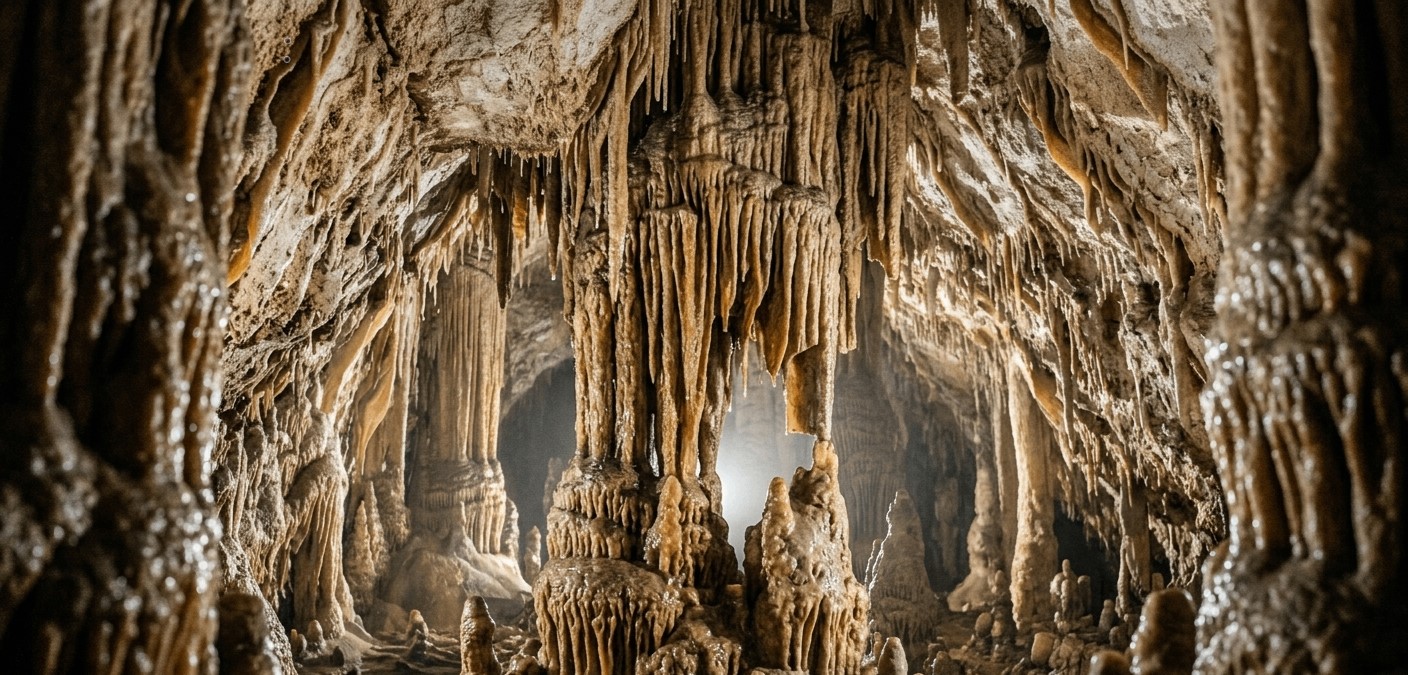
- Speleothems: The cave is famous for its high concentration of "draperies," "stalactites," and "stalagmites." Some formations are so translucent they resemble amber or wax.
- Climate: The interior maintains a constant temperature of approximately 8–10°C (46–50°F) year-round, with humidity levels reaching nearly 100%.
- The "Sound" of Stone: In certain chambers, the limestone formations are so delicate that the rhythm of dripping water creates a natural, echoing "music" that resonates through the silence.
- Purity of Air: The air inside Magura Cave is incredibly pure, filtered through hundreds of meters of rock, making it almost entirely free of outdoor pollutants and allergens.
- Slow Art: Some of the larger columns you see took over 10,000 years to form, growing at a rate of only a few millimeters per century.
Magura Cave offers an "off-the-beaten-path" experience. Unlike highly modernized caves with neon lights and concrete paths, Magura retains a sense of discovery. It is a place where you can truly feel the ancient pulse of the Earth and witness a world that has remained unchanged for millennia.
A nice video which present Magura Cave (Peștera Măgura):
Frequently Asked Questions: Magura Cave (Peștera Măgura)
1. Where is Magura Cave located?
Magura Cave is situated in the Apuseni Mountains of Western Romania, specifically in the Sigismund Valley basin near the village of Sighiștel (Bihor County). It is part of one of the densest limestone (karst) regions in the country.
2. How difficult is the cave to explore?
Compared to "show caves" like Bears' Cave (Peștera Urșilor) (see more), Magura is more rugged. While the main galleries are accessible, it is considered a medium-difficulty site. Visitors should be prepared for uneven terrain, slippery surfaces, and some narrow passages.
3. Do I need a guide to visit?
Yes, it is highly recommended (and sometimes required for conservation) to visit with a local guide or a professional speleologist. Because it is a protected site, a guide ensures you don't get lost in the labyrinthine galleries and helps protect the fragile limestone formations from accidental damage.
4. What should I wear inside the cave?
Temperature: The cave stays around 8–10°C (46–50°F) year-round, so bring a jacket or fleece even in summer.
Footwear: Wear sturdy, waterproof hiking boots with good grip.
Gear: A helmet and a reliable headlamp are essential, as there is no artificial lighting inside.
5. Is Magura Cave famous for anything specific?
It is best known among enthusiasts for its extraordinary density of formations. While some caves are large but "empty," Magura is packed with delicate "draperies," stalactites, and translucent columns that look like wax sculptures.
6. Can I take photos inside?
Photography is usually permitted, but flash photography should be used sparingly to avoid disturbing the bat colonies. Tripods may be difficult to use due to the narrow paths and high humidity.
7. Are there bats in the cave?
Yes, several species of bats use Magura Cave for hibernation. They are harmless to humans and are a protected species. If you see them, it is important to remain quiet and avoid shining bright lights directly at them.
8. How long does a typical visit last?
A standard tour of the accessible galleries usually takes between 1 to 2 hours, depending on the pace of the group and how much time is spent admiring the formations.
