
The Art of the Perfect Meatball
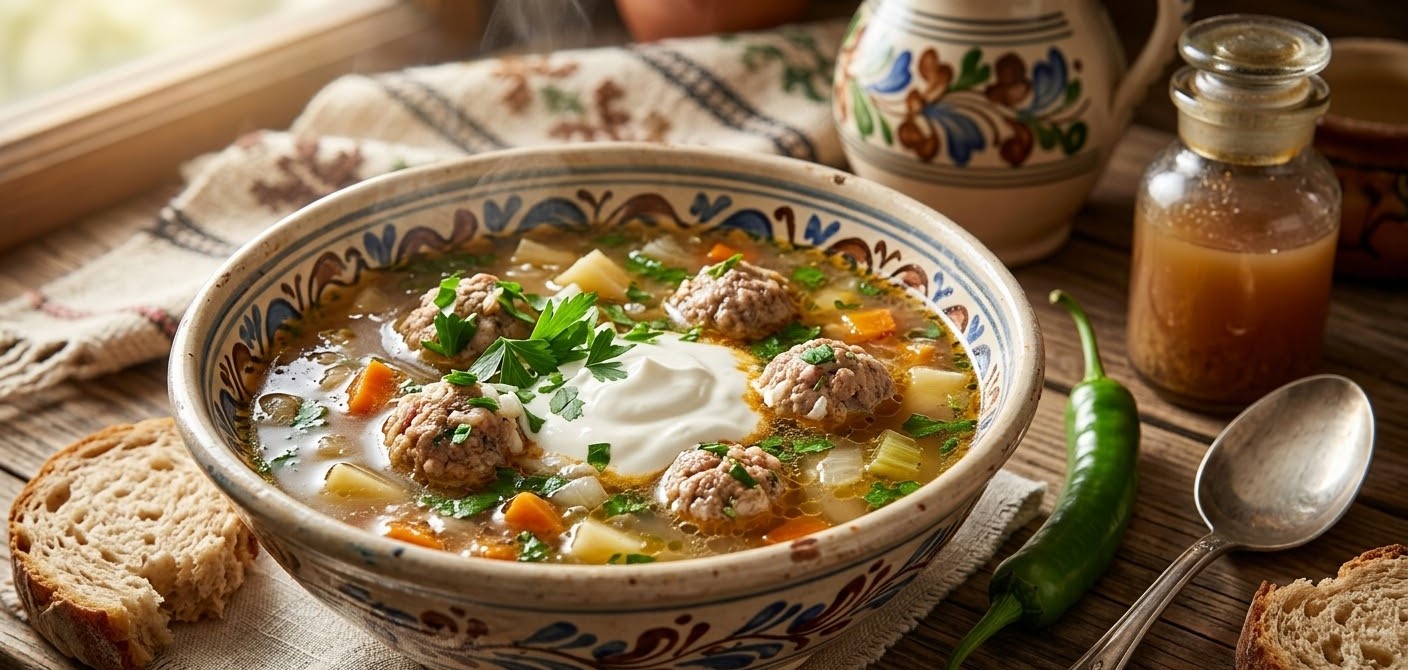
The secret to a great Ciorbă de Perișoare lies in the texture of the meatballs (perișoare).
- The Blend: Traditionally made from a mix of ground pork and beef to ensure both flavor and tenderness.
- The Secret Ingredient: A small amount of raw rice is added to the meat mixture. As the meatballs simmer in the broth, the rice expands, acting like tiny anchors that keep the meatballs light and fluffy rather than dense.
- The Aromatics: Fresh lovage (leustean) or parsley is finely chopped and mixed into the meat, providing an unmistakable herbal note from the inside out.
The Signature Romanian Sour Note
What sets Romanian soups apart is the "borș"—a unique fermented wheat bran liquid used to give the soup its signature sour kick.
- Borș vs. Lemon: While some modern versions use lemon or vinegar, the traditional, authentic flavor comes from borș, which also adds a probiotic depth to the broth.
- The Vegetable Base: The soup starts with a rich base of carrots, parsnips, onions, and bell peppers, often sautéed slightly to release their natural sweetness before the water is added.
In Romanian culture, a "ciorbă" is almost always the first course of a main meal.
- The "Smântână" Ritual: It is almost mandatory to serve this soup with a generous dollop of cold, thick sour cream (smântână) on top.
- The Spicy Kick: A hot green pepper (ardei iute) on the side is the traditional companion, offering a sharp contrast to the creamy broth.
- Homemade Bread: A thick slice of crusty, homemade bread is used to soak up every last drop of the flavorful liquid.
- Etymology: The word "perișoară" is a diminutive of "peră" (pear), referring to the small, round shape of the meatballs.
- Regional Variations: In Transylvania, the soup is often thickened with a mixture of egg yolks and sour cream (liezon) at the end, while in Moldova, the borș is the star.
- Health Benefits: Because it is packed with vegetables and lean protein, it is considered one of the healthiest comfort foods in the Romanian diet.
FAQ: The Authentic Romanian Meatball Soup (Ciorbă de Perișoare)
What gives the soup its unique sour taste?
The secret is Borș, a traditional liquid made from fermented wheat bran. It provides a complex, tangy flavor and is also a natural probiotic. If borș is unavailable, Romanians sometimes use lemon juice or the juice from pickled cabbage (moare de varză) to achieve that essential sour kick.
What is the secret to soft, fluffy meatballs?
A true Romanian cook adds a small amount of raw rice to the meat mixture. As the meatballs simmer in the broth, the rice grains expand, acting as tiny spacers that keep the meat from becoming too dense or tough.
Which herb is essential for this soup?
While parsley is often used, the "soul" of a Romanian ciorbă is Lovage (Leuștean). This herb has a very strong, distinct aroma—a mix of celery, parsley, and citrus—that defines the scent of a traditional Romanian kitchen.
How is Ciorbă de Perișoare usually served?
It is almost always served hot with a generous dollop of Smântână (thick, fermented sour cream) on top. To complete the experience, a fresh hot green pepper (ardei iute) is served on the side, providing a sharp, spicy contrast to the creamy broth.
Is it a main course or a starter?
In Romania, "Ciorba" is traditionally the first course of a two or three-course lunch. However, because Ciorba de Perișoare is so hearty and rich in meat and vegetables, it can easily be enjoyed as a light and healthy main meal on its own.
Can I find this soup all over Romania?
Yes! It is a national staple found in every region, from the mountains of Transylvania to the Danube Delta (see more). While regional variations exist (some use more cream, others more borș), the core recipe of meat, rice, and sour broth remains a beloved constant.
