
The Legend and the Artist
Born in a suburb of Bucharest in 1913, Maria's talent was evident from a young age. She didn't just sing songs; she told stories that bridged the gap between the rural village and the sophisticated city.
- The Voice of a Nation: Maria Tănase had a unique ability to take raw, traditional folk music from every corner of Romania and refine it without losing its primal honesty.
- International Icon: She represented Romania at the 1939 New York World's Fair, where her performance reportedly moved international audiences to tears, even though they couldn't understand a word of the lyrics.
- A Symbol of Resilience: Despite facing political pressures throughout her career, she remained fiercely dedicated to her craft and her people, becoming a symbol of cultural continuity during Romania’s most turbulent decades.
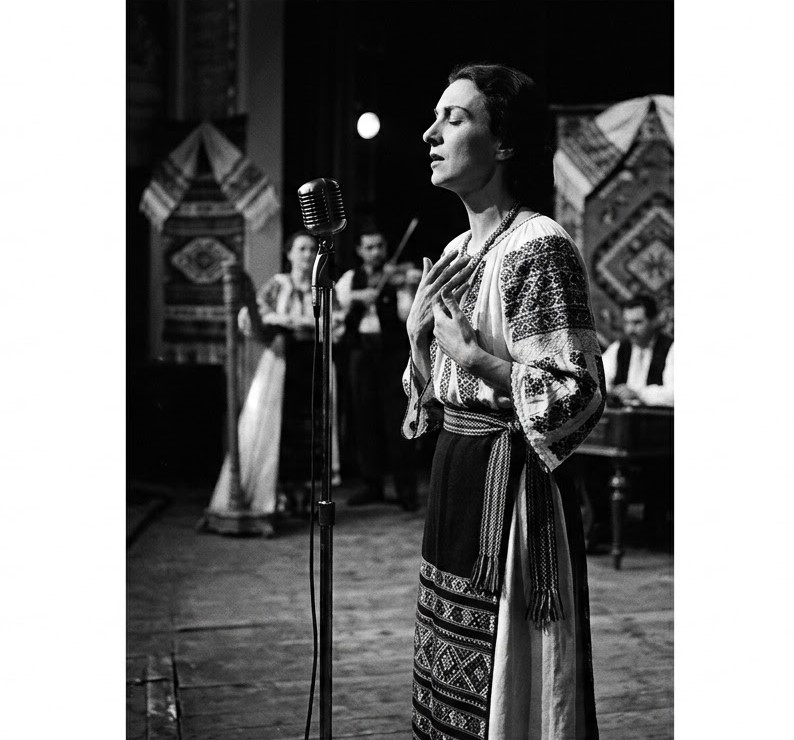
Cultural Impact and Legacy
Maria Tănase was a pioneer who transformed how Romanian folklore was perceived:
- The Repertoire: She collected and performed songs like "Ciuleandra", "Lume, lume" (World, oh World), and "Cine iubește și lasă" (He who loves and leaves). These songs are now considered sacred pieces of Romanian musical heritage.
- Cinematic Presence: Beyond music, she was an accomplished actress on stage and in film, bringing her magnetic charisma to every role she played.
- The "Icons of Romania": She is the quintessential figure for your "The Icons of Romania" category, representing the bridge between ancient tradition and modern cultural expression.
- Debut: Her professional debut took place on Radio Romania in 1938, an event that changed the course of Romanian music history overnight.
- Recognition: She was awarded the State Prize and the title of Emeritus Artist for her immense contribution to the arts.
- A Grand Farewell: When she passed away in 1963, her funeral was attended by hundreds of thousands of people in Bucharest, turning into a national day of mourning. It is said that the entire city was covered in flowers.
- The "Diva" with a Heart: Maria was known for her immense generosity, often giving away her earnings to poor musicians or families in need.
- Multilingual: Although she sang primarily in Romanian, she also performed in French and other languages to bring Romanian soul to a global audience.
- Nature Lover: She had a deep love for the Romanian landscape, often saying that her voice was a reflection of the mountains, the plains, and the rivers of her homeland.
FAQ: Maria Tănase - The Nightingale (see more) of the Carpathians
Q: Why is Maria Tănase called the "Edith Piaf of Romania"?
A: This comparison arises from her incredible ability to convey deep, raw emotion through her voice. Like Piaf, Maria Tănase possessed a unique, husky timbre and a magnetic stage presence that allowed her to turn traditional folk songs into universal masterpieces of longing and passion.
Q: What is the most famous song by Maria Tănase?
A: While she had a vast repertoire, her most iconic songs include "Ciuleandra" (an energetic dance song), "Lume, lume" (World, oh World), and the haunting "Cine iubește și lasă" (He who loves and leaves). These tracks remain staples of Romanian culture today.
Q: Did she only sing folk music?
A: Although she is best known for elevating Romanian folklore, Maria Tănase was a versatile artist. She performed operetta, theater, and even "romante" (urban ballads). She was also a talented actress who appeared in several films and stage plays.
Q: Was she famous outside of Romania?
A: Yes. Her performance at the 1939 New York World's Fair was a turning point, earning her international acclaim. She also toured extensively in Turkey and was highly respected by European artists of her time for her authenticity.
Q: What does the word "Dor" mean in her songs?
A: "Dor" is a uniquely Romanian word that is notoriously difficult to translate. It combines feelings of longing, nostalgia, love, and missing someone or somewhere. Maria Tănase is considered the supreme interpreter of "dor" in Romanian music.
Q: How is her legacy celebrated today in Romania?
A: She is revered as a national treasure. Her name is carried by numerous folk music festivals (such as the "Maria Tănase" National Festival in Craiova), and her recordings are still broadcasted and remixed by modern artists who seek to honor her style.
Q: When did she live?
A: Maria Tănase was born on September 25, 1913, and passed away on June 22, 1963. Her funeral in Bucharest was one of the largest in the city's history, with nearly a million people lining the streets to say goodbye.
