
Biodiversity and Natural Features
While its name suggests an unpleasant presence, the cave is actually a site of major ecological importance.
- Bat Sanctuary: The cave serves as a vital habitat for several bat colonies (primarily Rhinolophus species). These creatures play a crucial role in the local ecosystem. For this reason, access may sometimes be restricted to protect their hibernation or nursery periods.
- Natural Microclimate: Being a relatively short cave (about 250 meters), it maintains a constant air current, providing a natural cooling effect even during the scorching summer days on the Danube banks.
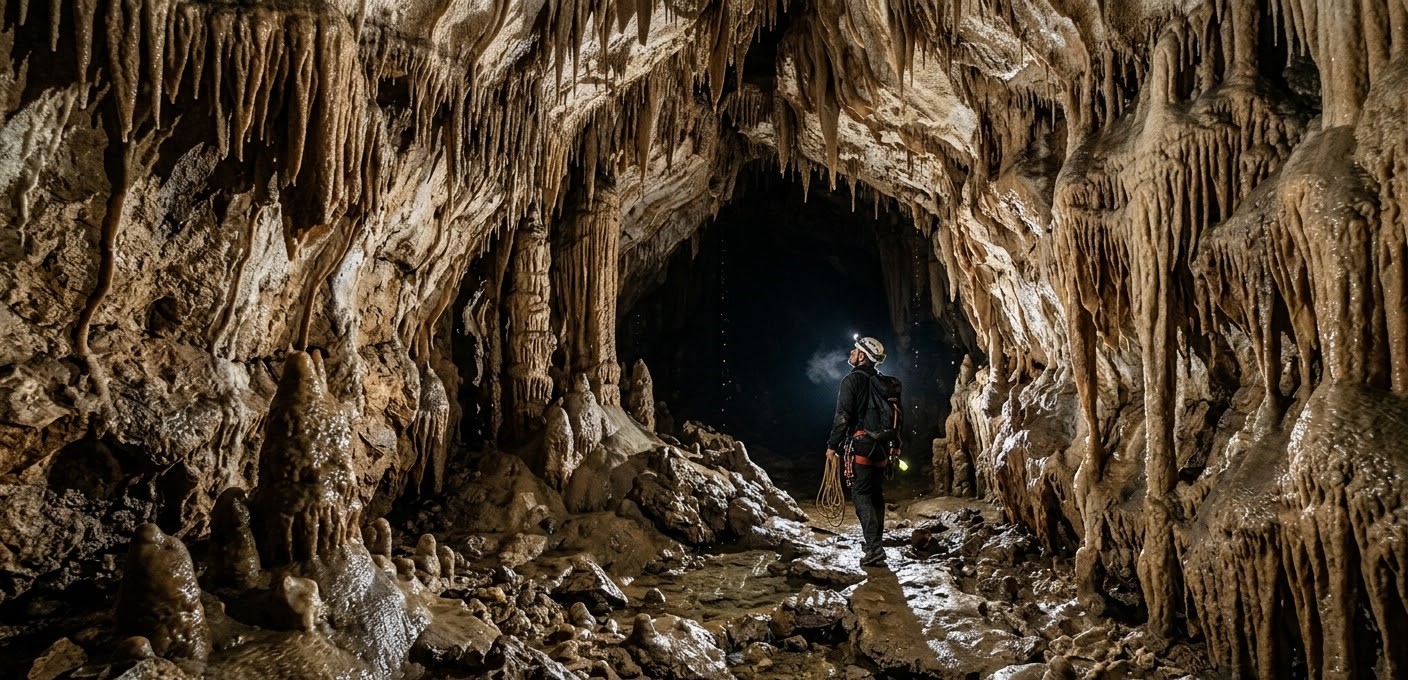
- Karst Formations: The interior features small rimstone pools (gururi), modest stalactites, and stalagmites, though many have been weathered by centuries of human presence.
The Legend of the "Killer Fly" (Musca Columbacă)
This is perhaps the most famous story associated with the cave. According to local lore, this cave was the birthplace of the Columbacă Fly, a venomous insect that once attacked livestock, causing them to perish in agony.
St. George and the Dragon: Legend says that after St. George wounded the dragon, the beast retreated into this cave to die. From its rotting blood and decaying heads, these "killer flies" were supposedly born.
The Scientific Reality: Fascinatingly, the fly actually existed (Simulium columbaczense) and caused massive agricultural losses in past centuries. While locals believed they emerged from the cave, biologists later proved they bred in the fast-flowing waters of the Danube. However, the legend of the cave as the "source of evil" remains.
Fun Facts for the Curious Traveler
- A Natural Fortress: The cave was fortified as far back as the Dacian and Roman periods. In the 18th century, the Austrian army transformed it into a strategic defense point, building the stone walls that are still visible at the entrance today.
- The View: The entrance offers one of the most spectacular panoramic views of the Danube and the Serbian shore—perfect for landscape photography.
- The Name: "Columbacă" comes from the old name of the Serbian town across the river, Golubac (meaning "pigeon").
- Location: Caraș-Severin County, on DN57, between Coronini and Liubcova.
- Length: ~250 meters.
- Difficulty: Easy at the entrance, but requires a flashlight for exploring the inner galleries.
- Accessibility: The entrance is elevated from the road and is reached via a metal staircase.
Frequently Asked Questions: Gaura cu Muscă Cave
Where exactly is the cave located?
The cave is situated in Caras-Severin County, specifically in the Danube Gorge (Clisura Dunarii). You can find it along the main road DN57, between the villages of Coronini and Liubcova. It is easily visible from the road as a large opening in the limestone cliff.
How do I access the entrance?
Access is very straightforward. There is a small pull-off area by the road where you can park your vehicle. From there, you climb a metal staircase that leads directly from the roadside up to the cave entrance.
Is the Killer Fly still there?
No. The famous Musca Columbaca (the fly mentioned in local legends) has been extinct in this region since the late 1960s. The construction of the Iron Gates I Dam changed the water speed and temperature of the Danube, which destroyed the specific conditions these flies needed to breed. You can explore the cave without any concern regarding these insects.
Do I need a guide or special equipment?
For the entrance and the main balcony, no guide or equipment is needed. The entrance is wide and offers plenty of natural light and a stunning view of the Danube. However, if you want to explore the 250-meter gallery, you must bring a powerful flashlight. Sturdy hiking shoes are also recommended as the floor can be damp and slippery.
Can I see the bats?
Yes, the cave is home to significant colonies of bats. You will likely see them hanging from the ceiling in the darker sections. It is important not to shine lights directly at them or make loud noises, as they are protected species and are easily stressed by human presence.
How long does a visit take?
A quick stop to see the entrance and take photos of the Danube takes about 15 to 20 minutes. If you decide to explore the entire length of the cave, plan for approximately 45 minutes.
What are the stone walls at the entrance?
Those are remnants of 18th-century Austrian fortifications. The cave was used as a strategic defensive outpost to monitor ship traffic on the Danube and to defend the border against Ottoman incursions.
Is there an entrance fee?
No, visiting Gaura cu Musca is currently free of charge. Since it is an unmanned site, visitors are kindly asked to keep it clean and respect both the historical and natural environment.
