
The "Golden" Frescoes & Art
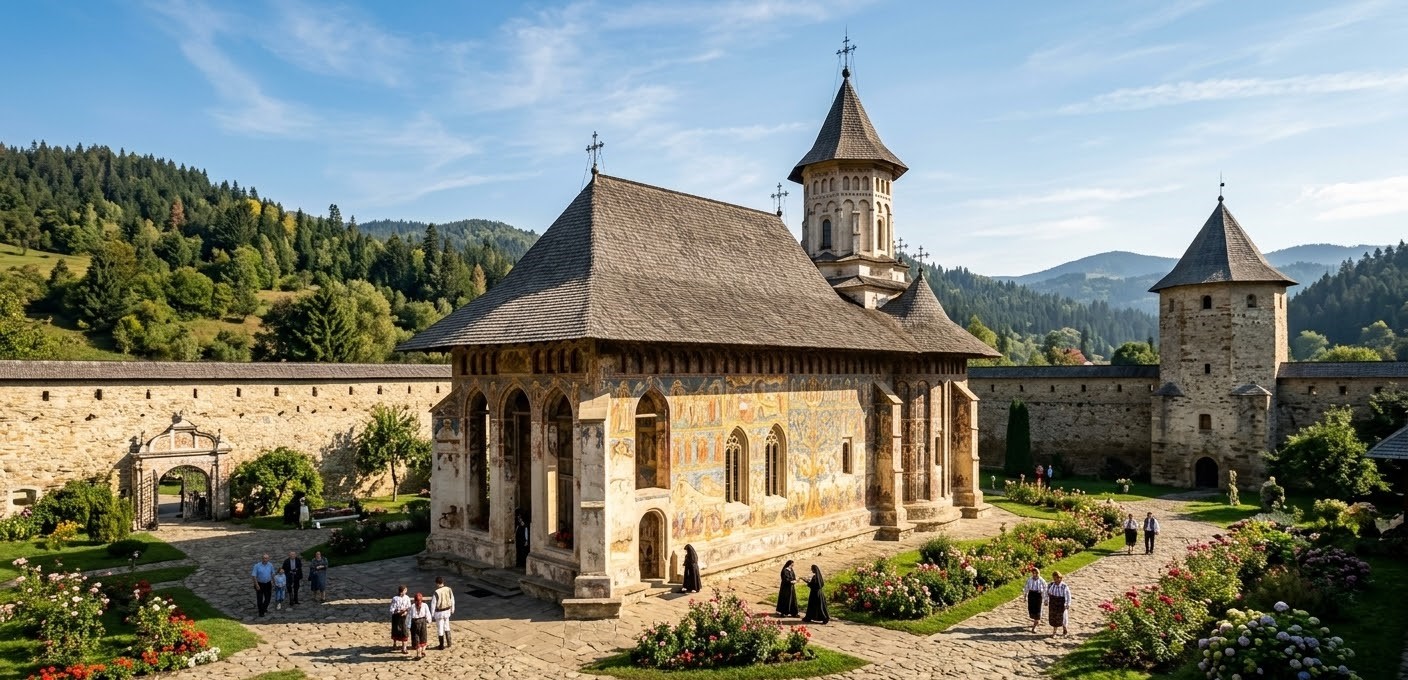
The dominant color here is a warm yellow-gold, which sets it apart from the "Voroneț Blue."
- The Siege of Constantinople: The most famous fresco on the exterior walls, depicting the historical event of 626 AD. It was used back then not just as art, but as a way to boost the morale of the local people against invaders.
- The Tree of Jesse: A spectacular vertical composition showing the genealogy of Jesus, a common theme in Bukovina but executed here with exceptional detail.
Legends and Stories
The Secret of the Colors
Locals and historians alike are still fascinated by the durability of the paint. Legend has it that the craftsmen mixed the pigments with organic ingredients like honey, eggs, and charcoal, but the exact "recipe" that allowed these paintings to survive five centuries of sun, rain, and snow remains a mystery.
The Prince's Fortress
It is said that Petru Rareș chose this specific spot because the surrounding hills provided a natural defense. The monastery wasn't just a place of prayer, but a sanctuary where the local population could take refuge during Tatar or Ottoman raids, protected by the thick, 5-meter-high walls.
Fun Facts for Travelers
- A Military Monastery: Look closely at the walls—you'll see watchtowers and firing ports. It’s one of the best examples of a "fortified church" in Eastern Europe.
- The Hidden Museum: Inside the monastery compound, there is a museum housing the "Golden Apple" award (Pomme d'Or), which was given to the Bukovina region by the International Federation of Travel Writers in 1975.
- The Clapper (Toaca): If you visit during prayer times, you will hear the rhythmic sound of the toaca (a wooden plank beaten with hammers), a tradition that dates back to the early days of Orthodox Christianity.
- Founder: Prince Petru Rareș (son of Stephen the Great)
- Date of Construction: 1532
- Architectural Style: Moldavian style (a blend of Gothic and Byzantine elements)
- UNESCO Status: Included in the World Heritage List since 1993
- Location: Vatra Moldoviței, Suceava County, Bukovina Region
When exploring the painted wonders of Bukovina, it is impossible to separate the stories of Moldovița and Sucevița. Linked by both geography and history, these two fortified treasures represent the pinnacle of Moldavian medieval art.
While Moldovița was founded by Prince Petru Rareș and is famous for its warm, golden frescoes, its legacy was carefully protected by the Movilă dynasty. This same noble family later founded Sucevița (see more), the last and largest of the externally painted monasteries, known for its deep emerald greens.
Today, the two are physically connected by the spectacular Palma Pass, a mountain road that offers breathtaking views as it winds between these two UNESCO World Heritage sites. Visiting them together allows you to witness the evolution of a unique architectural style that stood the test of time and invaders alike.
A stunning aerial video presenting Moldovița Monastery (Mănăstirea Moldovița):
FAQ: Visiting Moldovița Monastery
What makes Moldovița different from other painted monasteries?
While each monastery has a signature color, Moldovița is defined by its warm yellow and gold tones. It is also one of the most complete fortified structures, offering a clear view of how these spiritual sites doubled as military defenses.
Is there an entrance fee?
Yes, there is a small fee (usually around 10-15 RON) which goes toward the maintenance and restoration of the frescoes. If you wish to take professional photos in the courtyard, an additional photography fee might apply.
Can I see the nuns who live there?
Yes, Moldovița is an active convent. You will often see the nuns tending the beautiful flower gardens or hear them sounding the Toaca (the wooden clapper) to announce the start of a service. Please remember to be respectful and quiet.
Is it easy to visit Moldovița and Voroneț (see more) in the same day?
Absolutely. The monasteries of Bukovina are relatively close to each other. Moldovița is about a 45-minute drive from Gura Humorului (where Voroneț and Humor are located). Most tourists visit 3 or 4 monasteries in a single day trip.
What is the "Golden Apple" award?
In the monastery’s museum, you can see the Pomme d'Or, a prestigious international trophy awarded by travel writers. It recognizes the Painted Monasteries of Bukovina as a unique cultural destination of world-class importance.
Are there English-speaking guides available?
Many of the nuns at the monastery speak foreign languages, including English and French, and can provide historical details about the frescoes. Alternatively, you can hire a private guide from Suceava or Gura Humorului for a more in-depth tour.
