
Biodiversity: The Hardy Survivor of the Hills
- Habitat: You can find Măceș bushes everywhere—from the Danube Delta to the high mountain pastures. It is a pioneer species that protects the soil from erosion.
- Flowering: In late spring (May-June), the bush is covered in delicate pink or white flowers. By September, these transform into the famous red, oval-shaped fruits.
- Natural Wealth: Romanian wild rose hips are known to have one of the highest concentrations of Vitamin C in the European flora, along with Vitamin A, B1, B2, and K.
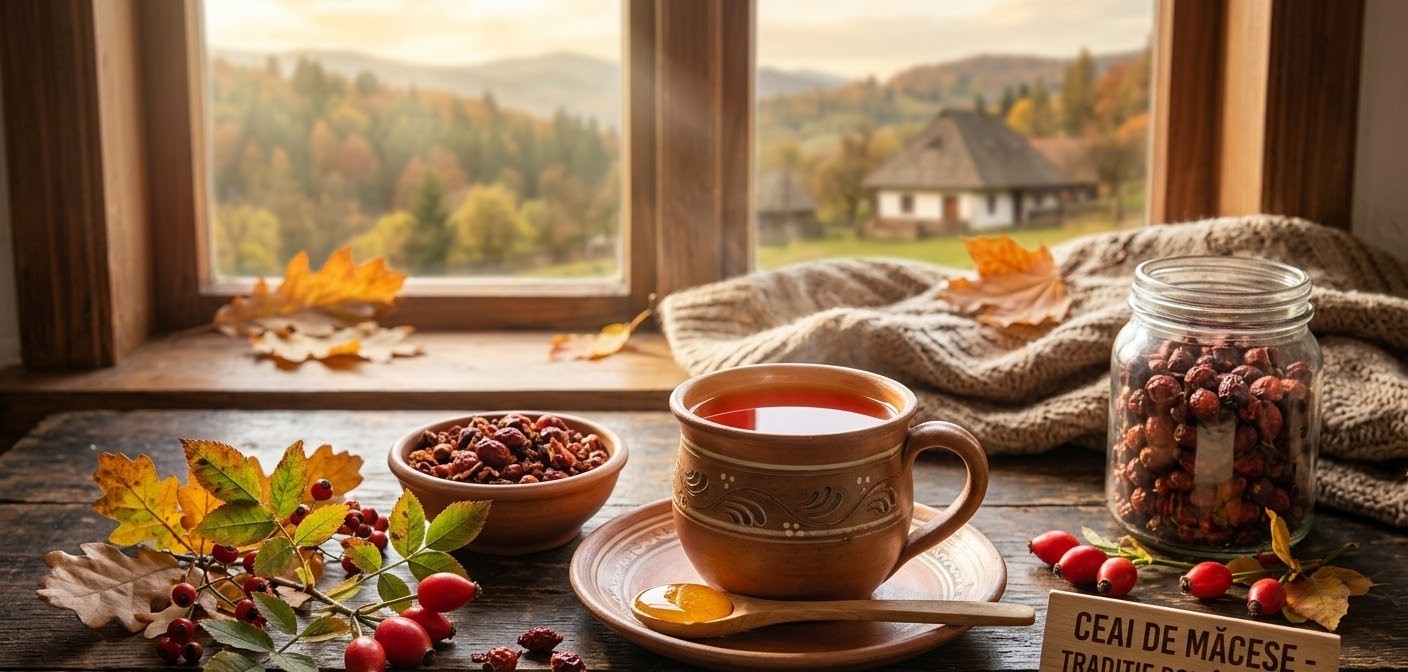
Traditional Use: The Romanian Ritual of Tea and Jam
In Romania, the relationship with this plant is deeply personal. As the cold season approaches, almost every Romanian family stocks up on rose hips.
- The Healing Tea: Romanians use dried rose hips to make a tart, refreshing tea that is the go-to remedy for the common cold and for boosting the immune system. It is often served with a spoon of local wildflower honey.
- Măceșe Jam (Pastiță): Perhaps the most beloved use is the traditional rose hip jam. Making it is a labor of love, as the seeds and the fine, stinging hairs inside the fruit must be carefully removed through a fine sieve. The result is a smooth, fine paste with a unique sweet-tangy flavor that you must try when visiting a Romanian village.
- The Protective Thorns: In old village traditions, rose hip branches were sometimes placed near windows or doors. It was believed that their sharp thorns would catch "evil spirits" or illnesses, preventing them from entering the house.
- A Sign of Winter: Local weather lore says that if the rose hip bushes are heavily loaded with fruit in autumn, a particularly long and snowy winter is following.
- Scientific Name: Rosa canina.
- Fun Fact: During World War II, when citrus fruits were scarce, the British actually looked toward the wild rose hip as a primary source of Vitamin C for their population—a secret the Romanians had been using for centuries!
- Technical Tip: For the best tea, don't boil the rose hips! To preserve the Vitamin C, let them soak in warm water (around 60°C) for several hours.
FAQ: Discovering the Romanian Rose Hip (Măceșul)
1. What is a Rose Hip exactly?
A Rose Hip (Măceș in Romanian) is the round, red fruit that remains on the wild dog rose bush (Rosa canina) after the petals have fallen off. It is essentially a "super-fruit" of the Romanian hills.
2. How do Romanians use Rose Hips for tea?
It is a staple in every Romanian household during winter. The fruits are dried and then crushed. To preserve the high Vitamin C content, locals often infuse them in warm (not boiling) water. The result is a vibrant, slightly tart tea that is naturally caffeine-free and excellent for immunity.
3. Can I eat the fruit straight from the bush?
While the outer red skin is edible and sweet-tangy, the inside is filled with tiny, irritating hairs that can cause an "itchy" sensation in the throat. Romanians usually process them into tea, syrup, or the famous rose hip jam (pastiță de măceșe) to avoid this.
4. Why is the Romanian rose hip jam so special?
The jam is legendary because it requires immense patience. The fruits must be boiled and then passed through very fine sieves multiple times to remove every single tiny hair. The final paste is incredibly smooth, thick, and has a flavor profile that sits somewhere between a plum and a tomato, but sweeter.
5. When is the best time to see or pick them in Romania?
The bushes are most beautiful in September and October when they turn bright red. Locals usually wait for the first frost to pick them, as the cold snap softens the fruit and makes the natural sugars more prominent.
6. Where can I find these bushes?
Everywhere! From the plains of the Danube to the high altitudes of the Carpathian Mountains. They love sunny slopes and are often found at the edge of forests or along rural dirt roads.
7. Is there any symbolic meaning to the Măceș in Romania?
In rural folklore, the thorny branches are seen as protectors. Because they stay red and vibrant even as winter approaches, they symbolize vitality and endurance. A cup of rose hip tea is often seen as "drinking the sun's energy" during the dark winter months.
