
The Legend: The Tears of the Mountain
Local stories often link the waterfalls in this region to the lives of the Moți people. It is said that the water represents the pure spirit of the mountains, and drinking from the base of the falls during a full moon brings clarity and strength to those who live in these rugged lands.
Biodiversity and Geology: A Living Museum
- The Tufa Rock: The waterfall drops from a height of about 18 meters over a massive limestone (tufa) threshold. Over thousands of years, the calcium-rich water has deposited layers of rock, creating a "frozen" look to the cliffside.
- Ancient Flora: The humid microclimate around the falls supports rare mosses and ferns that cling to the limestone, creating a vibrant green contrast against the white water.
- The Surroundings: Just a few hundred meters away, you can find the Hill of Snails (Dealul cu Melci), an extraordinary paleontological reserve with over 35 species of fossilized mollusks from the Upper Cretaceous period.
Fun Facts & Curiosities
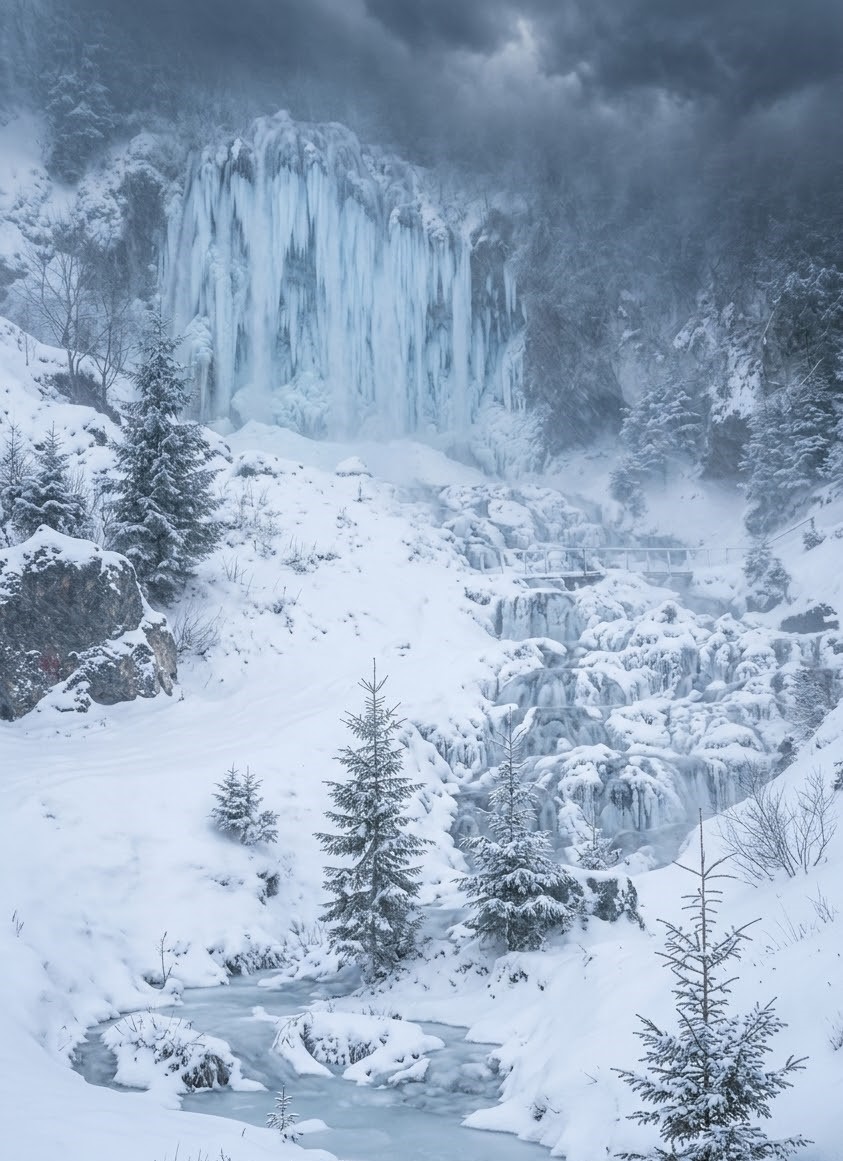
- Winter Magic: In very cold winters, the entire 18-meter wall of water freezes into giant ice organ pipes, creating a surreal crystal cathedral.
- Accessibility: Unlike many wild waterfalls in Romania, Pișoaia is very easy to reach, being just a short, flat walk from the main road in Nemeși village.
- Height: ~18 meters.
- Location: Nemeși village, Vidra commune, Alba County.
- Best time to visit: Late spring when the flow is at its peak, or autumn for the golden foliage of the surrounding trees.
- Nearby Attraction: After visiting the waterfall, don't miss the Avram Iancu Memorial House, located just a few kilometers away.
FAQ: Visiting the Pisoaia Waterfall (Cascada Pișoaia)
1. Where exactly is Pisoaia Waterfall located?
The waterfall is situated in the Vidra commune (Nemeși village), in Alba County. It is tucked away in the heart of the Apuseni Mountains, in an area famously known as Țara Moților (The Land of the Moți).
2. Is there an entrance fee to visit the waterfall?
No, visiting the Pisoaia Waterfall and the nearby Hill of Snails (Dealul cu Melci) is currently free of charge. It is a natural monument open to all nature lovers.
3. How difficult is the hike to the waterfall?
The path is very easy. From the main road in Nemeși, it’s a flat, 10-15 minute walk through a picturesque meadow. It is perfect for families with children or elderly travelers who want to see a spectacular sight without a strenuous climb.
4. What is the best season to see the waterfall?
- Spring (April - May): This is when the water volume is at its highest due to melting snow, making the 18-meter drop look truly powerful.
- Winter: If the temperatures drop significantly, the waterfall freezes into massive, spectacular ice pillars.
Absolutely! Within walking distance (approx. 500m), you can visit the Hill of Snails, a unique paleontological reserve with fossilized shells. Also, the Avram Iancu Memorial House, a key historical site for Romania, is only a 5-minute drive away.
6. Is it safe to drink the water from the fall?
While the water is crystal clear and comes from limestone springs, it is generally advised for tourists to stick to bottled water or local checked springs to avoid any digestive issues, as wild animals are unpredictable and may frequent the upstream area.
7. Is there parking available nearby?
Yes, there is a small parking area near the main road in Nemeși village, close to the "Dealul cu Melci" information sign, from where the walking path begins.
