
The Mystery of the Checkered Petals
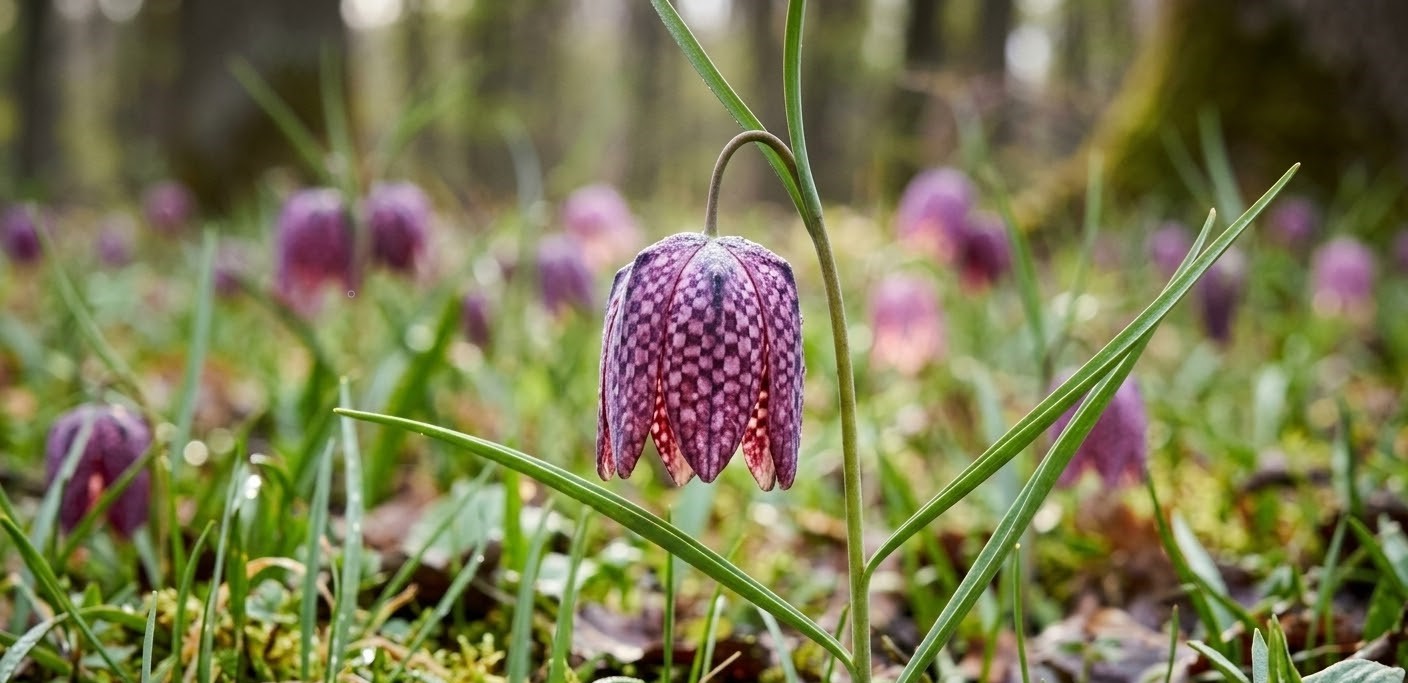
The name "meleagris" comes from the Greek word for guinea fowl, as the pattern on the petals resembles the bird’s speckled feathers.
- A Rare Sight: In Romania, the Fritillary is a monument of nature. It thrives only in specific humid, swampy meadows and oak forests like Botorogi.
- The "Drooping" Beauty: Unlike common garden tulips that stand tall, the Fritillary has a delicate, bell-shaped flower that hangs downward, as if shyly hiding its beauty from the world.
- Short-Lived Magic: The blooming period is very short, usually lasting only 7 to 10 days between late March and mid-April, depending on the temperature.
Legends: The Tears of the Forest
Local folklore often weaves stories around this unusual flower:
- The Checkerboard Curse: One legend says the flowers were once plain, but a forest spirit "painted" them with a chessboard pattern to remind humans that nature always has a strategic move to survive.
- Tears of Sorrow: Another story tells that the flowers bowed their heads in sorrow after a great loss in the forest, and the spots represent the dried tears of the earth.
The Botorogi Forest is a protected area of national interest. It's not just about the tulips:
- The Secular Oaks: The forest is dominated by massive, centuries-old oaks that provide the perfect filtered light for the Fritillary to grow.
- A Fragile Balance: The soil here must remain damp. Any drainage or change in the water table could cause these rare flowers to disappear forever.
- Strict Protection: It is strictly forbidden to pick these flowers. Since they reproduce via bulbs and seeds that take years to mature, picking even one can damage the local population's survival.
FAQ: Visiting the Botorogi Forest (The Checkered Tulip Sanctuary)
1. Why is the Checkered Tulip (Laleaua Pestriță) so special?
The Fritillaria meleagris is a monument of nature in Romania. Its most striking feature is the geometric, "checkerboard" pattern on its petals, which looks almost man-made. It is a very fragile species that only grows in specific humid, meadow-like conditions within oak forests, making places like Botorogi rare sanctuaries for its survival.
2. Can I pick the flowers to take home?
Strictly no. Picking the Checkered Tulip is illegal and carries heavy fines, as it is a protected species. More importantly, the plant is very sensitive; once picked, it wilts almost instantly, and removing the flower prevents the seeds from spreading, which can lead to the extinction of the local colony.
3. What is the best time to see the bloom in Botorogi?
The blooming window is very narrow, usually lasting only 7 to 14 days. Depending on the weather, this typically happens between late March and mid-April. If you want to see them at their peak, it is best to check local social media groups or forest ranger updates in Gorj County starting in March.
4. How do I get to Botorogi Forest?
The forest is located in Gorj County, very close to the city of Târgu Jiu (near the Vădeni area). It is easily accessible by car. Once you reach the edge of the forest, there are walking paths that lead into the damp meadows where the tulips grow.
5. What should I wear for the visit?
Because the Fritillary loves "wet feet," the ground in Botorogi Forest is often soggy or even flooded during the spring. It is highly recommended to wear waterproof hiking boots or rubber boots (cizme de cauciuc) to navigate the area comfortably without getting wet or muddy.
6. Are there any photography rules?
Photographers are welcome, but you must be extremely careful where you step. The young shoots and unbloomed bulbs are small and easily crushed underfoot. Stay on the established paths and use a zoom lens for close-up shots to avoid trampling the surrounding vegetation.
