
A Masterpiece of Nature
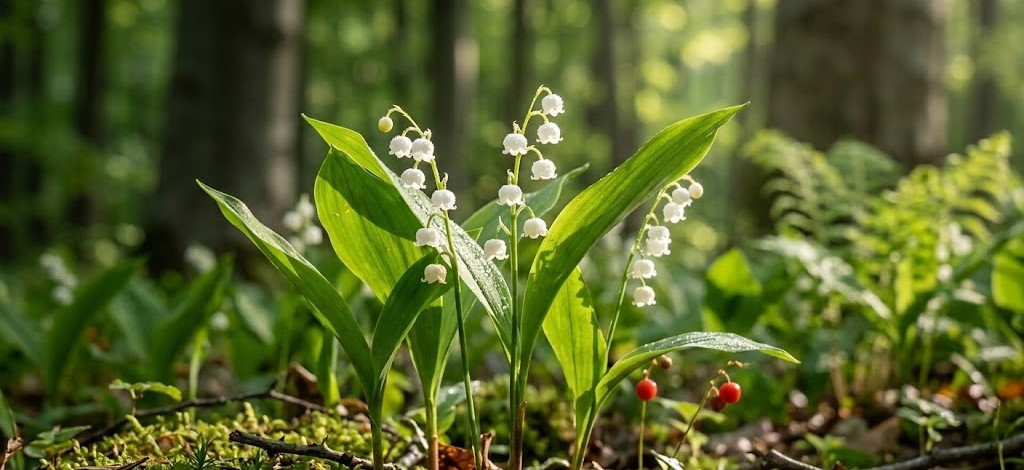
Standing only 15–30 cm tall, this perennial plant features two large, oblong leaves that protect a thin stem adorned with 5 to 15 nodding, bell-shaped flowers.
- The Scent: Its fragrance is legendary—sweet, fresh, and unmistakable. It has inspired world-class perfumes for centuries.
- The Red Jewels: After the white bells fade, they are replaced by small, bright red berries. Warning: While beautiful, every part of this plant, including the berries, is highly toxic if ingested.
In Romania, Lăcrămioara thrives in:
- Deciduous Forests: Especially under the shade of oak and beech trees where the soil is rich and moist.
- Hilly Regions: From the sub-Carpathian hills of Prahova to the deeper valleys of Transylvania.
- Wild Meadows: Often found at the edge of forests, creating vast, fragrant carpets of white.
Fun Facts & Curiosities
-The "Tears of Mary": In Christian tradition, it is said that the flowers grew from the tears shed by the Virgin Mary at the cross, which is why in Romanian they are called "Lăcrămioare" (Little Tears).
-The Royal Choice: It was the favorite flower of Queen Elizabeth II and featured prominently in the bridal bouquet of Grace Kelly.
-Medicinal History: Although toxic in raw form, extracts from the plant have been used cautiously in traditional medicine for centuries to treat heart conditions.
The Legend of the Two Orphan Siblings (Legenda celor doi orfani)
In the heart of the Carpathian Mountains, there is a touching story about the origin of these "little tears":
The Brother and Sister: Legend says there were once two orphan siblings, a boy and a girl, who loved each other dearly. They lived in a small hut at the edge of a deep forest. One day, the brother fell gravely ill and passed away.
The Infinite Grief: Heartbroken, the sister spent days and nights crying over her brother's grave. She prayed to the spirits of the forest to turn her grief into something beautiful so that her brother’s memory would never fade.
The Transformation: As her tears fell upon the green leaves of the forest floor, they didn't soak into the earth. Instead, they turned into tiny, white, scented bells.
The Fragrant Messenger: This is why the flower is called Lăcrămioara (Little Tear). It is said that the scent of the flower is so powerful because it carries the sister's pure love, reaching all the way to the heavens to let her brother know he is not forgotten.
A nice short video presenting Lily of the Valley in the forest:
Frequently Asked Questions: Lily of the Valley (Lăcrămioara)
1. Is the Lily of the Valley native to Romania?
Yes, it is a native species that grows spontaneously in the deciduous forests of Romania, especially in the sub-Carpathian hills and the lowlands of Transylvania and Moldavia.
2. Why is it called "Lăcrămioara" in Romanian?
The name translates to "Little Tear." It comes from the shape of the flowers, which look like tiny white dewdrops or tears hanging from a delicate green stem, a motif deeply rooted in Romanian emotional folklore.
3. Is the plant poisonous?
Yes, highly. Every part of the Lily of the Valley—the leaves, the flowers, and especially the bright red berries that appear in autumn—contains cardiac glycosides. It is toxic to humans, dogs, and cats if ingested. Always wash your hands after touching them and keep them away from children.
4. Can I find Lily of the Valley in the mountains?
While it prefers hilly and plateau regions (up to 1,000 meters), you can find it at the foot of the mountains in oak or beech forests. It rarely grows in high-altitude coniferous forests.
5. What does the scent symbolize in Romanian culture?
The scent of Lăcrămioara is the ultimate symbol of Spring's arrival. It represents purity, hidden beauty, and "the return of happiness." In the past, young people would offer small bouquets of these flowers as a sign of sincere affection.
6. How long does the blooming period last?
It is quite short-lived. The flowers usually appear in late April and last about 3 to 4 weeks, disappearing by early June as the forest canopy closes and provides deep shade.
7. Can I grow them in my own garden?
Yes, they are popular garden plants because they spread easily via underground rhizomes. They prefer shady spots under trees, mimicking their natural forest habitat. However, be careful as they can become invasive in a small garden!
