The Pețea Scardine (Roșioara lui Racoviță): The Lost Gem of Thermal Waters +views
Posted: Fri Feb 27, 2026 2:29 pm
A Prehistoric Survivor
The Pețea Scardine (Scardinius racovitzai), known locally as Roșioara lui Racoviță, was a unique species of freshwater fish that lived only in one place on Earth: the thermal waters of the Pețea Lake (see more) in Băile 1-Mai, near Oradea. Named after the world-renowned Romanian biologist Emil Racoviță, this small fish was a "relict" species—a survivor of the post-glacial era that adapted to live in warm thermal springs.
The Thermal Sanctuary
For thousands of years, the fish thrived in water temperatures that remained constant at around 28°C - 30°C, even in the dead of winter. This was possible thanks to the natural thermal springs that fed the Pețea Lake. It shared this unique ecosystem with other rarities, such as the thermal water lily (Nymphaea lotus var. termalis) and the thermal snail (Melanopsis parreyssi).
The Tragedy of Extinction in the Wild
Unfortunately, the Pețea Scardine is currently considered extinct in the wild.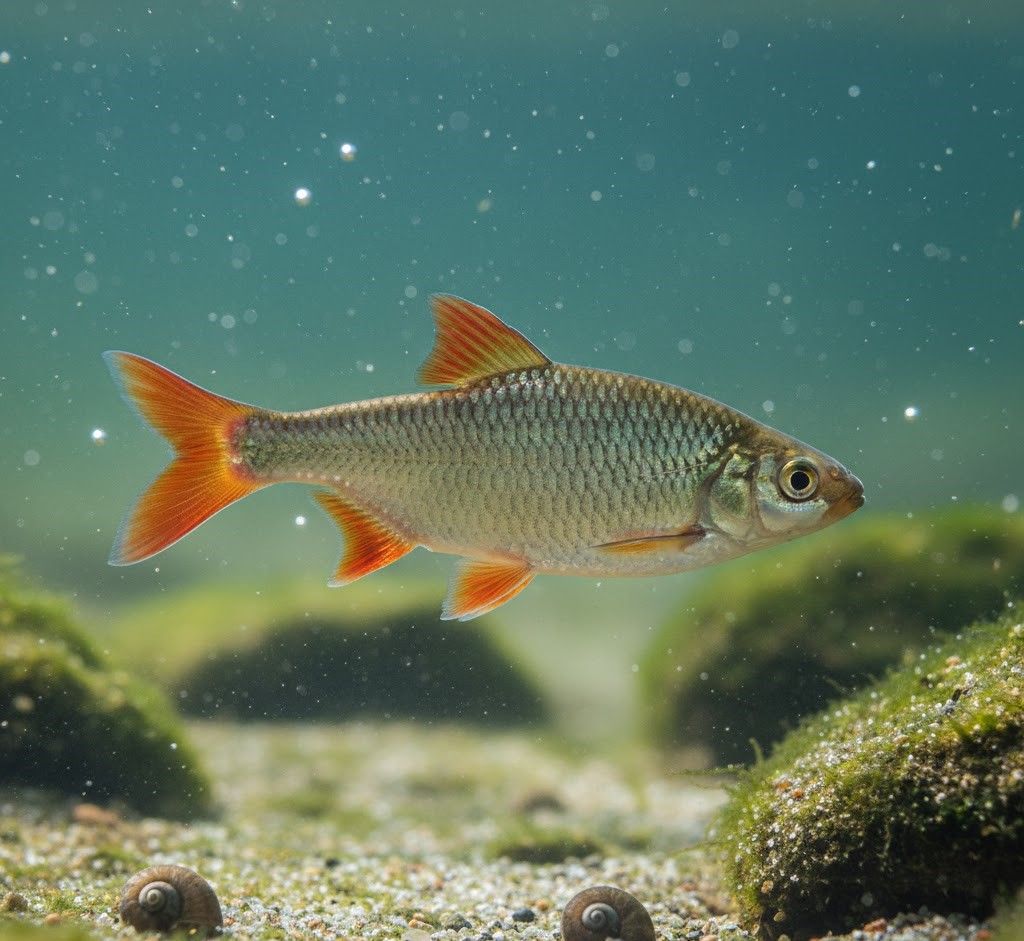 Why It Matters to Romania
The Roșioara lui Racoviță is a symbol of Romanian natural heritage. It reminds us that our country's biodiversity includes not only vast mountains and forests but also tiny, hidden wonders that exist nowhere else. Protecting the thermal springs of Bihor is not just about tourism; it’s about preserving a biological history that spans millions of years.
FAQ: The Pețea Scardine (Roșioara lui Racoviță)
1. Can I still see this fish in nature?
Currently, no. The Pețea Lake has suffered significant ecological damage, and the fish can no longer be found in its natural habitat. It is kept in captivity to prevent total extinction.
2. Who discovered this species?
While the lake was known, the species was scientifically described and named in honor of Emil Racoviță, the founder of biospeleology and a pioneer of Romanian science.
3. What did the fish look like?
It was a small fish, usually between 8–12 cm long, with a slightly deeper body than the common scardine and distinct reddish fins, adapted specifically to the mineral-rich thermal waters.
4. Is there any hope for the Pețea Lake?
There are ongoing ecological efforts to restore the water levels by regulating the extraction of thermal water in the area. If the lake returns to its natural state, there are plans to reintroduce the species.
5. Where can I learn more about it?
The Țării Crișurilor Museum in Oradea has extensive information and exhibits regarding the unique flora and fauna of the Pețea thermal complex.
The Pețea Scardine (Scardinius racovitzai), known locally as Roșioara lui Racoviță, was a unique species of freshwater fish that lived only in one place on Earth: the thermal waters of the Pețea Lake (see more) in Băile 1-Mai, near Oradea. Named after the world-renowned Romanian biologist Emil Racoviță, this small fish was a "relict" species—a survivor of the post-glacial era that adapted to live in warm thermal springs.
The Thermal Sanctuary
For thousands of years, the fish thrived in water temperatures that remained constant at around 28°C - 30°C, even in the dead of winter. This was possible thanks to the natural thermal springs that fed the Pețea Lake. It shared this unique ecosystem with other rarities, such as the thermal water lily (Nymphaea lotus var. termalis) and the thermal snail (Melanopsis parreyssi).
The Tragedy of Extinction in the Wild
Unfortunately, the Pețea Scardine is currently considered extinct in the wild.
- The Cause: Massive over-exploitation of the thermal aquifer for local tourism led to the drying up of the Pețea Lake's springs.
- The Rescue: In a race against time, biologists managed to save a few specimens. Today, the species survives only in controlled laboratory environments and a few specialized aquariums, waiting for the day their natural home might be restored.
- Scientific Importance: It remains a crucial subject for evolutionary biology, showing how a species can evolve in complete isolation within a thermal "island."
Shot of the Pețea Scardine (Scardinius racovitzai) swimming near the lake bed with thermal snails.
The Roșioara lui Racoviță is a symbol of Romanian natural heritage. It reminds us that our country's biodiversity includes not only vast mountains and forests but also tiny, hidden wonders that exist nowhere else. Protecting the thermal springs of Bihor is not just about tourism; it’s about preserving a biological history that spans millions of years.
FAQ: The Pețea Scardine (Roșioara lui Racoviță)
1. Can I still see this fish in nature?
Currently, no. The Pețea Lake has suffered significant ecological damage, and the fish can no longer be found in its natural habitat. It is kept in captivity to prevent total extinction.
2. Who discovered this species?
While the lake was known, the species was scientifically described and named in honor of Emil Racoviță, the founder of biospeleology and a pioneer of Romanian science.
3. What did the fish look like?
It was a small fish, usually between 8–12 cm long, with a slightly deeper body than the common scardine and distinct reddish fins, adapted specifically to the mineral-rich thermal waters.
4. Is there any hope for the Pețea Lake?
There are ongoing ecological efforts to restore the water levels by regulating the extraction of thermal water in the area. If the lake returns to its natural state, there are plans to reintroduce the species.
5. Where can I learn more about it?
The Țării Crișurilor Museum in Oradea has extensive information and exhibits regarding the unique flora and fauna of the Pețea thermal complex.