Vrancea Mountains (Munții Vrancei): The Land of the Seven Sons and Untamed Wilderness +video and views
Posted: Fri Feb 27, 2026 1:24 pm
The Gateway to the Curvature Carpathians
Located where the Carpathian Mountains bend, the Vrancea Mountains are not the highest in Romania, but they are among the most mysterious and rugged. This is a place where nature remains largely "unplugged" from the modern world, offering a mix of deep valleys, limestone formations, and vast forests. For a traveler looking to escape the crowded trails of the Bucegi or Făgăraș, Vrancea provides a sense of true solitude.
The Legend of Baba Vrâncioaia
One cannot speak of these mountains without mentioning the legend that gave the region its name. It is said that during a time of great peril, Stephen the Great (Ștefan cel Mare), the legendary Prince of Moldavia, was wandering these woods after a lost battle.
He found shelter in the house of an old woman named Baba Vrâncioaia. She sent her seven sons—Bodoc, Spiro, Negrilă, Bîra, Spulber, Pavăl, and Cunțu—to gather an army of local shepherds. They fought bravely, defeated the invaders, and in return, the Prince gifted the seven sons the seven mountains of Vrancea. To this day, many villages in the area bear the names of these brothers.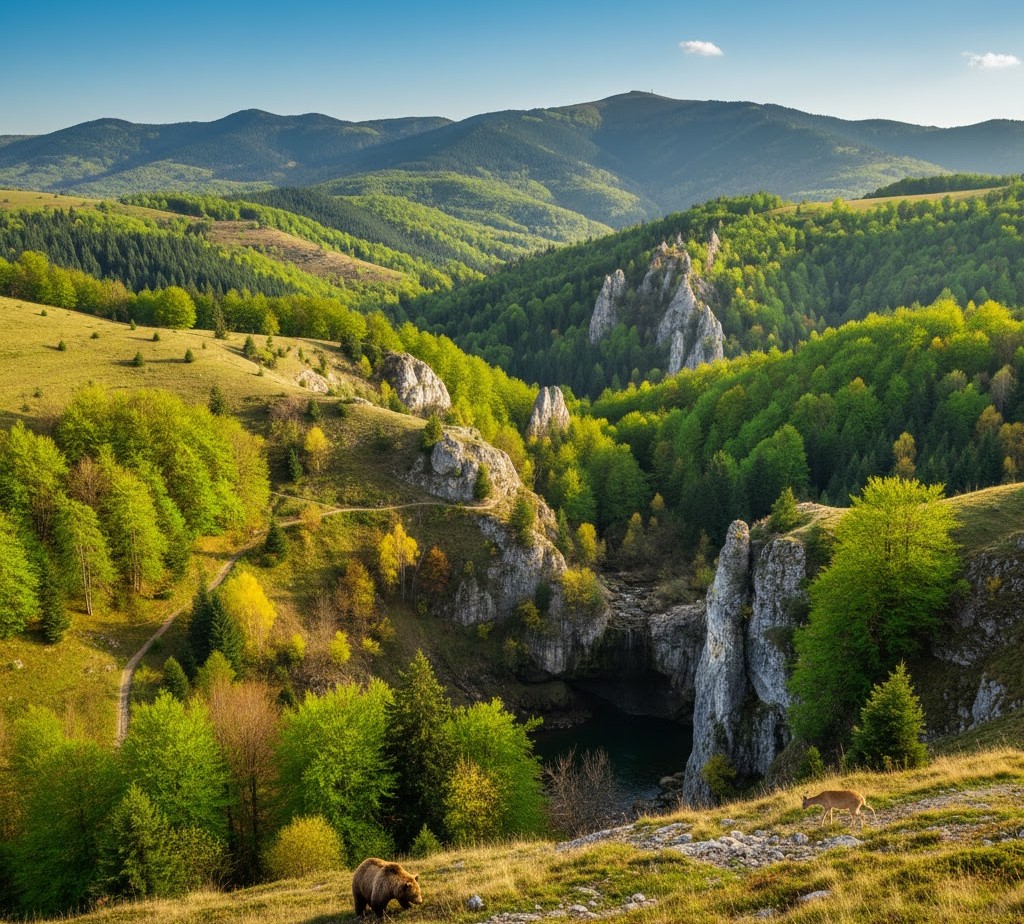 Biodiversity: A European Stronghold
For an international visitor, the biological richness of the Vrancea Mountains is staggering. This region is a vital corridor for Europe’s "Big Three" predators:
Unique Landmarks & Curiosities
Vrancea is for the hiker who appreciates authenticity. You won't find luxury resorts here; instead, you'll find sheepfolds where shepherds still make cheese using centuries-old methods and trails where you are more likely to see a deer than another person.
A stunning video presenting the wild lands of Vrancea Mountains (Munții Vrancei):
Frequently Asked Questions about the Vrancea Mountains
1. Where exactly are the Vrancea Mountains located?
The Vrancea Mountains are situated in the Curvature Carpathians of eastern Romania, primarily within Vrancea County, but also touching parts of Covasna and Buzău. The nearest major gateway is the city of Focșani.
2. Is it safe to hike there considering the large bear population?
Yes, it is safe as long as you follow standard Carpathian hiking rules. Always hike in groups, make noise (talk or sing) to avoid surprising wildlife, and never leave food outside your tent. The bears in Vrancea are shy and usually avoid human contact.
3. What is the best time of year to visit?
The main trails within the Putna-Vrancea Natural Park are marked (look for the red, blue, or yellow symbols on white backgrounds). However, because this is a less commercialized area, some secondary trails can be wilder. It is highly recommended to use a GPS app or a local guide.
5. Can I see the "Living Fires" (Focurile Vii) in the mountains?
The most famous "Living Fires" are actually located in the Vrancea Sub-Carpathians, near the village of Andreiașu de Jos. It is a short drive from the main mountain trails and is a unique geological phenomenon where natural gas ignites spontaneously from the ground.
6. What kind of accommodation can I find?
Vrancea is known for its agritourism. Instead of large hotels, you will find cozy guesthouses (pensiuni) in villages like Lepșa or Soveja. These offer a more authentic experience and the chance to taste local Vrancea dishes and the famous regional wines.
7. Do I need a permit to visit Putna-Vrancea Natural Park?
Generally, no special permit is required for hiking, but there might be a small conservation fee at certain entry points or landmarks like the Putna Waterfall. Always check local signs for the latest park regulations.
Located where the Carpathian Mountains bend, the Vrancea Mountains are not the highest in Romania, but they are among the most mysterious and rugged. This is a place where nature remains largely "unplugged" from the modern world, offering a mix of deep valleys, limestone formations, and vast forests. For a traveler looking to escape the crowded trails of the Bucegi or Făgăraș, Vrancea provides a sense of true solitude.
The Legend of Baba Vrâncioaia
One cannot speak of these mountains without mentioning the legend that gave the region its name. It is said that during a time of great peril, Stephen the Great (Ștefan cel Mare), the legendary Prince of Moldavia, was wandering these woods after a lost battle.
He found shelter in the house of an old woman named Baba Vrâncioaia. She sent her seven sons—Bodoc, Spiro, Negrilă, Bîra, Spulber, Pavăl, and Cunțu—to gather an army of local shepherds. They fought bravely, defeated the invaders, and in return, the Prince gifted the seven sons the seven mountains of Vrancea. To this day, many villages in the area bear the names of these brothers.
Wild Vrancea Mountains landscape with lush green forests and bear.
For an international visitor, the biological richness of the Vrancea Mountains is staggering. This region is a vital corridor for Europe’s "Big Three" predators:
- The Brown Bear: (see more) Vrancea boasts one of the highest densities of bears in the Carpathian chain.
- The Grey Wolf (see more): The deep, uninhabited valleys are perfect territory for wolf packs.
- The Eurasian Lynx: (see more) The "ghost of the forest" is frequently monitored here by conservationists.
Unique Landmarks & Curiosities
- The Putna Waterfall (Cascada Putnei): (see more) A powerful hydrologic monument where the Putna River has carved its way through the rock. It’s a must-see for photography enthusiasts.
- The "Living Fires" (Focurile Vii) (see more): In the nearby sub-Carpathian area, natural gas seeps through cracks in the earth and ignites, creating a perpetual, flickering flame that seems magical, though it is purely geological.
- The Vrancea Earthquake Zone: Interestingly, this is the most seismically active area in Romania. While visitors rarely feel anything, the unique geology is a point of great interest for scientists worldwide.
Vrancea is for the hiker who appreciates authenticity. You won't find luxury resorts here; instead, you'll find sheepfolds where shepherds still make cheese using centuries-old methods and trails where you are more likely to see a deer than another person.
A stunning video presenting the wild lands of Vrancea Mountains (Munții Vrancei):
Frequently Asked Questions about the Vrancea Mountains
1. Where exactly are the Vrancea Mountains located?
The Vrancea Mountains are situated in the Curvature Carpathians of eastern Romania, primarily within Vrancea County, but also touching parts of Covasna and Buzău. The nearest major gateway is the city of Focșani.
2. Is it safe to hike there considering the large bear population?
Yes, it is safe as long as you follow standard Carpathian hiking rules. Always hike in groups, make noise (talk or sing) to avoid surprising wildlife, and never leave food outside your tent. The bears in Vrancea are shy and usually avoid human contact.
3. What is the best time of year to visit?
- Late Spring (May-June): For blooming flora and roaring waterfalls.
- Autumn (September-October): For the spectacular colors of the ancient beech forests and the traditional wine festivals in the foothills.
- Winter: Only for experienced hikers with proper gear, as the ridges can be very windy and snow-covered.
The main trails within the Putna-Vrancea Natural Park are marked (look for the red, blue, or yellow symbols on white backgrounds). However, because this is a less commercialized area, some secondary trails can be wilder. It is highly recommended to use a GPS app or a local guide.
5. Can I see the "Living Fires" (Focurile Vii) in the mountains?
The most famous "Living Fires" are actually located in the Vrancea Sub-Carpathians, near the village of Andreiașu de Jos. It is a short drive from the main mountain trails and is a unique geological phenomenon where natural gas ignites spontaneously from the ground.
6. What kind of accommodation can I find?
Vrancea is known for its agritourism. Instead of large hotels, you will find cozy guesthouses (pensiuni) in villages like Lepșa or Soveja. These offer a more authentic experience and the chance to taste local Vrancea dishes and the famous regional wines.
7. Do I need a permit to visit Putna-Vrancea Natural Park?
Generally, no special permit is required for hiking, but there might be a small conservation fee at certain entry points or landmarks like the Putna Waterfall. Always check local signs for the latest park regulations.