Voroneț Monastery (Mănăstirea Voroneț): The Sistine Chapel of the East +video and views
Posted: Wed Feb 25, 2026 3:42 pm
Located in the town of Gura Humorului, Voroneț Monastery is a medieval jewel and a UNESCO World Heritage site. Built by Stephen the Great (Ștefan cel Mare) in 1488 in just 3 months and 3 weeks, it remains one of the most significant artistic and religious symbols of Romania.
The Mystery of "Voroneț Blue"
The monastery is world-renowned for its exterior frescoes, but specifically for the "Voroneț Blue"—a vibrant, intense shade of azure that has survived centuries of harsh weather without fading. To this day, the exact composition of the pigment remains a partial mystery, though scientists have identified a base of azurite mixed with organic substances.
The most impressive mural is "The Last Judgment", which covers the entire western wall. It is so detailed and masterfully executed that it earned the monastery the nickname "The Sistine Chapel of the East."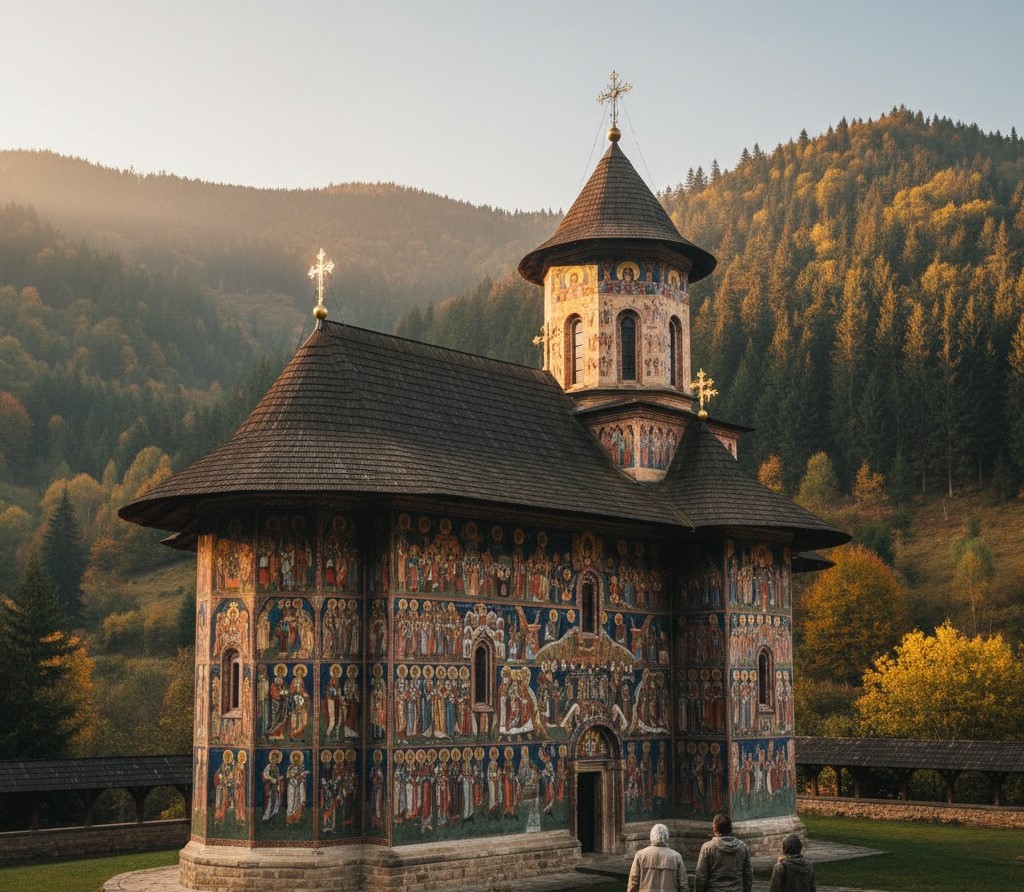 Legends & History
The foundation of the monastery is tied to a powerful legend involving Stephen the Great (see more) and the hermit Daniel the Hesychast (Sfântul Daniil Sihastrul) (see more):
The Hermit's Counsel: During a difficult war against the Ottoman Empire, Stephen sought the advice of Daniel, who lived in a cave nearby. The hermit encouraged the prince to continue the fight, prophesying victory. After the triumph, as a sign of gratitude to God and the hermit, Stephen built the monastery on the site where Daniel’s wooden church once stood.
Biodiversity & Surroundings
Voroneț is situated in the heart of Bukovina, surrounded by:
Frequently Asked Questions: Voroneț Monastery (Mănăstirea Voroneț)
Q: What makes "Voroneț Blue" so famous? A: It is a unique shade of blue that is exceptionally durable. Despite being exposed to the elements for over 500 years, the color has remained incredibly vibrant. The secret lies in its composition (azurite mixed with a mysterious organic binder), which makes it change slightly in appearance depending on the light and humidity.
Q: Why is it called "The Sistine Chapel of the East"? A: This nickname refers to the massive "Last Judgment" fresco on the western wall. Much like Michelangelo’s masterpiece in Rome, it is a complex, highly detailed, and artistically brilliant depiction of the biblical end of the world, making it one of the most important mural paintings in Europe.
Q: Is there a dress code for visiting? A: Yes. Since Voroneț is an active monastery, visitors are expected to dress modestly out of respect. This means shoulders and knees should be covered. Many Romanian monasteries provide wrap-around skirts or shawls at the entrance for tourists who are unprepared.
Q: When was the monastery built? A: It was built in 1488 by Stephen the Great (Ștefan cel Mare). Remarkably, historical records show that the main structure was completed in just 3 months and 3 weeks to celebrate a victory against the Ottoman Empire.
Q: Can I see the cave of Daniel the Hermit? A: Yes, the cell of Saint Daniel the Hermit (Sfântul Daniil Sihastrul) is located nearby in Putna. It is a small cell carved entirely into a rock where the monk lived and where Stephen the Great came to seek spiritual advice.
Q: Are there other painted monasteries nearby? A: Absolutely. Voroneț is part of a larger group of UNESCO Painted Churches of Moldavia. Other famous ones nearby include Humor, Moldovița, Sucevița, and Arbore, each with its own dominant color and unique history.
The Mystery of "Voroneț Blue"
The monastery is world-renowned for its exterior frescoes, but specifically for the "Voroneț Blue"—a vibrant, intense shade of azure that has survived centuries of harsh weather without fading. To this day, the exact composition of the pigment remains a partial mystery, though scientists have identified a base of azurite mixed with organic substances.
The most impressive mural is "The Last Judgment", which covers the entire western wall. It is so detailed and masterfully executed that it earned the monastery the nickname "The Sistine Chapel of the East."
Voroneț Monastery with famous blue frescoes and tourists in Bukovina.
The foundation of the monastery is tied to a powerful legend involving Stephen the Great (see more) and the hermit Daniel the Hesychast (Sfântul Daniil Sihastrul) (see more):
The Hermit's Counsel: During a difficult war against the Ottoman Empire, Stephen sought the advice of Daniel, who lived in a cave nearby. The hermit encouraged the prince to continue the fight, prophesying victory. After the triumph, as a sign of gratitude to God and the hermit, Stephen built the monastery on the site where Daniel’s wooden church once stood.
Biodiversity & Surroundings
Voroneț is situated in the heart of Bukovina, surrounded by:
- Ancient Forests: The monastery is nestled in a landscape of rolling hills and dense spruce and beech forests.
- The Moldova River: The nearby river valley creates a microclimate that is often misty and cool, adding to the spiritual and serene atmosphere of the site.
- The "Social" Mural: Look closely at the frescoes; you will see traditional Romanian elements integrated into biblical scenes, such as angels playing the bucium (a long shepherd's horn) or traditional Moldavian costumes.
- UNESCO Status: It is part of the "Churches of Moldavia" UNESCO group.
- Etiquette: As it is a working monastery, visitors are asked to dress modestly (shoulders and knees covered).
Frequently Asked Questions: Voroneț Monastery (Mănăstirea Voroneț)
Q: What makes "Voroneț Blue" so famous? A: It is a unique shade of blue that is exceptionally durable. Despite being exposed to the elements for over 500 years, the color has remained incredibly vibrant. The secret lies in its composition (azurite mixed with a mysterious organic binder), which makes it change slightly in appearance depending on the light and humidity.
Q: Why is it called "The Sistine Chapel of the East"? A: This nickname refers to the massive "Last Judgment" fresco on the western wall. Much like Michelangelo’s masterpiece in Rome, it is a complex, highly detailed, and artistically brilliant depiction of the biblical end of the world, making it one of the most important mural paintings in Europe.
Q: Is there a dress code for visiting? A: Yes. Since Voroneț is an active monastery, visitors are expected to dress modestly out of respect. This means shoulders and knees should be covered. Many Romanian monasteries provide wrap-around skirts or shawls at the entrance for tourists who are unprepared.
Q: When was the monastery built? A: It was built in 1488 by Stephen the Great (Ștefan cel Mare). Remarkably, historical records show that the main structure was completed in just 3 months and 3 weeks to celebrate a victory against the Ottoman Empire.
Q: Can I see the cave of Daniel the Hermit? A: Yes, the cell of Saint Daniel the Hermit (Sfântul Daniil Sihastrul) is located nearby in Putna. It is a small cell carved entirely into a rock where the monk lived and where Stephen the Great came to seek spiritual advice.
Q: Are there other painted monasteries nearby? A: Absolutely. Voroneț is part of a larger group of UNESCO Painted Churches of Moldavia. Other famous ones nearby include Humor, Moldovița, Sucevița, and Arbore, each with its own dominant color and unique history.