Globe Flower (Bulbucii de Munte): The Golden Crowns of the Carpathians +video and views
Posted: Tue Feb 24, 2026 12:55 pm
High up in the subalpine meadows of Romania, where the air is crisp and the soil remains moist from the melting snow, a spectacular flower blooms in early summer. Known as Bulbucii de Munte (Globe Flower), this plant looks like a perfectly round, golden pearl waiting to open.
A Masterpiece of Geometry
The Globe Flower (Trollius europaeus) is easily recognized by its unique shape: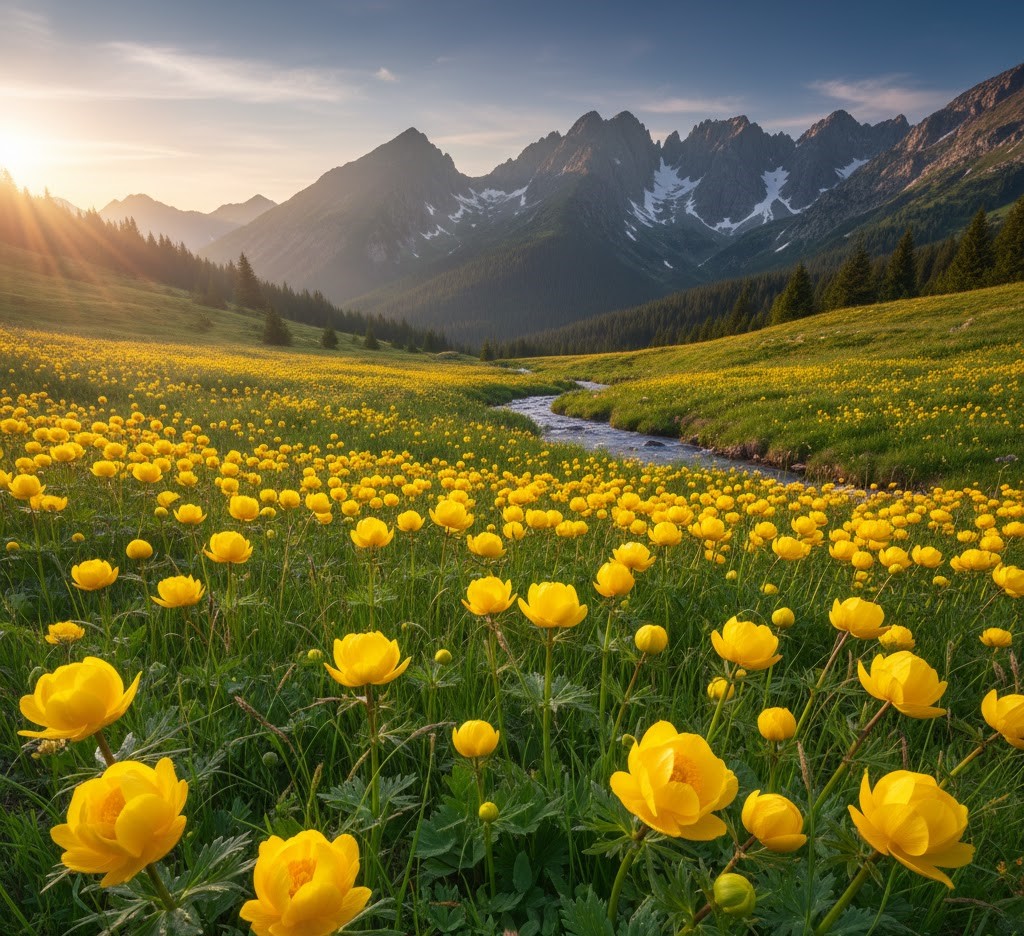 Where and When to Find Them
Location: They thrive in the Southern and Eastern Carpathians, usually at altitudes between 1,200 and 2,000 meters. You will often find them in damp meadows, near mountain springs, or at the edge of glacial lakes.
Blooming Season: The best time to see them is from late May to July, depending on how high the meadow is located and how long the winter lasted.
A Protected Beauty
The Globe Flower is a protected species in Romania. It is a rare find and a symbol of the purity of our mountain ecosystems.
FAQ: The Globe Flower (Trollius europaeus)
1. Is the Globe Flower toxic?
Yes, like many members of the Ranunculaceae (Buttercup) family, the plant contains substances that are toxic if ingested by humans or livestock. This is one of nature’s ways of protecting its beauty from being eaten by grazing animals.
2. Why don't the petals open fully?
The inward-curving sepals create a warm "microclimate" inside the flower. Small insects, particularly a specific type of fly, crawl inside to pollinate the flower while staying protected from the cold mountain air.
3. Are they common in all Romanian mountains?
While present in many massifs, they are most spectacular in the Bucegi (see more), Făgăraș, and Retezat National Parks, where the humidity levels are ideal for them.
A Masterpiece of Geometry
The Globe Flower (Trollius europaeus) is easily recognized by its unique shape:
- The "Globe" Shape: Unlike most flowers that open their petals wide to the sun, the Globe Flower’s sepals are curved inward, forming a tight, protective sphere. This structure protects the delicate pollen from the frequent mountain rains and cold winds.
- Vibrant Color: Its intense yellow-lemon hue is so bright that it can be spotted from hundreds of meters away against the green mountain slopes.
- The "Troll" Connection: Its Latin name, Trollius, is thought to come from an old German word for "globe" or "sphere," but many travelers love the folklore connection to "trolls," suggesting these were the favorite flowers of the mountain spirits.
Field of vibrant yellow Globe Flowers blooming by a mountain stream in the Romanian Carpathians at sunset.
Location: They thrive in the Southern and Eastern Carpathians, usually at altitudes between 1,200 and 2,000 meters. You will often find them in damp meadows, near mountain springs, or at the edge of glacial lakes.
Blooming Season: The best time to see them is from late May to July, depending on how high the meadow is located and how long the winter lasted.
A Protected Beauty
The Globe Flower is a protected species in Romania. It is a rare find and a symbol of the purity of our mountain ecosystems.
- Traveler's Tip: If you find a field of Globe Flowers, please take photos but never pick them. They wilt almost instantly once removed from their habitat, and their beauty belongs to the mountain.
FAQ: The Globe Flower (Trollius europaeus)
1. Is the Globe Flower toxic?
Yes, like many members of the Ranunculaceae (Buttercup) family, the plant contains substances that are toxic if ingested by humans or livestock. This is one of nature’s ways of protecting its beauty from being eaten by grazing animals.
2. Why don't the petals open fully?
The inward-curving sepals create a warm "microclimate" inside the flower. Small insects, particularly a specific type of fly, crawl inside to pollinate the flower while staying protected from the cold mountain air.
3. Are they common in all Romanian mountains?
While present in many massifs, they are most spectacular in the Bucegi (see more), Făgăraș, and Retezat National Parks, where the humidity levels are ideal for them.