
A Sanctuary of Biodiversity
Beyond the rocky peaks, the Gutâi Mountains are a vibrant ecosystem. The area is a haven for those who appreciate the quiet whispers of nature:
- Flora: The lower slopes are covered in ancient beech and spruce forests. In the spring and summer, the alpine meadows burst into color with rare flowers, including the mountain peony and various species of orchids.
- Fauna: As a reminder that wild animals are unpredictable, travelers should be aware that these mountains are home to the Carpathian brown bear, wolves, and lynxes (see more). On the rocky cliffs of the Crest, you might even spot the golden eagle soaring above.
- Protected Areas: The region includes the Mlaștina Poiana Brazilor, a unique peat bog located at nearly 1,000 meters altitude, housing glacial relict plants that are rarely found elsewhere in Romania.
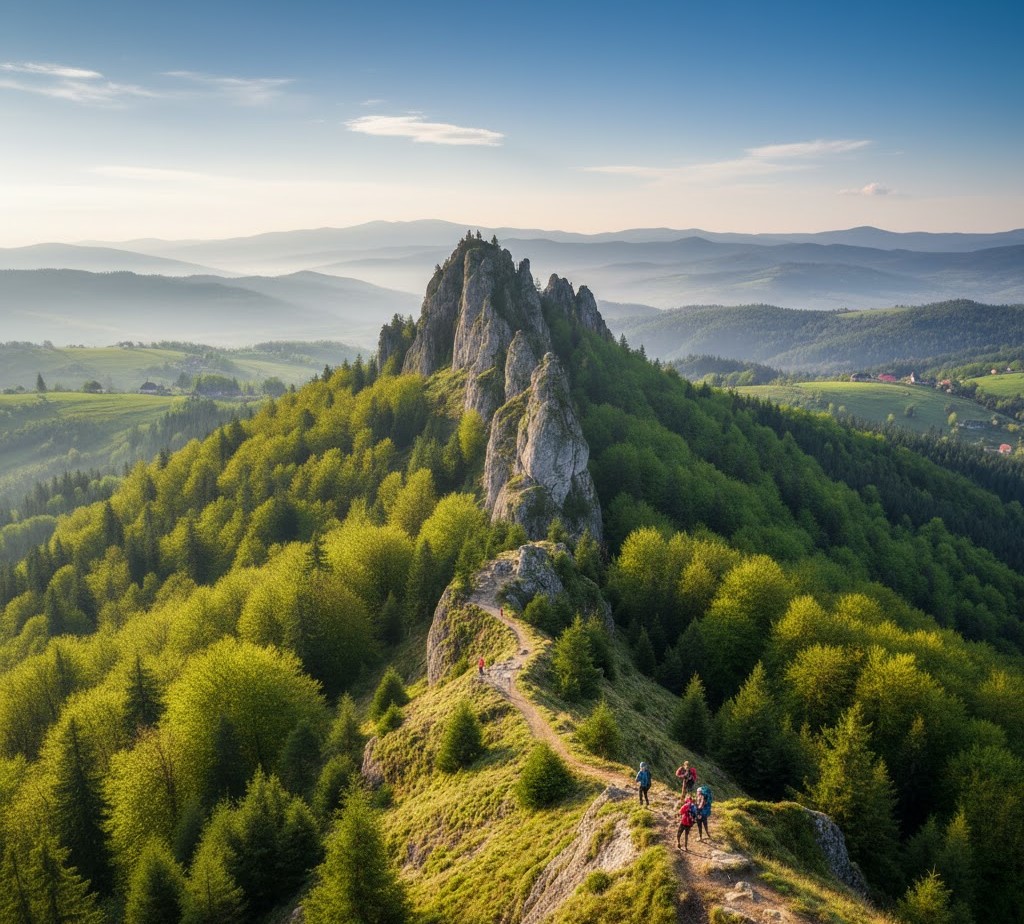
The Legend of the Rooster’s Crest (Creasta Cocoșului)
The most iconic landmark of the Gutâi Mountains is undoubtedly Creasta Cocoșului (The Rooster’s Crest). This 200-meter-long jagged ridge of andesite is a protected geological reserve and provides a breathtaking panoramic view of the Maramureș Depression.
Local folklore tells a fascinating tale about this formation. It is said that long ago, a giant rooster lived on these heights. When the devil tried to steal the treasures hidden within the mountains, the rooster crowed so loudly at dawn that the devil was startled, dropping his loot and petrifying the ridge into the shape we see today. Another legend claims the crest is actually a dragon turned to stone by a powerful wizard to protect the villagers below.
What to Expect for Hikers
Whether you are starting your journey from Pasul Gutâi or the village of Mara, the trails are well-marked but require respect for the changing mountain weather. The hike to Creasta Cocoșului is a must for any photography enthusiast, offering a "balcony view" over the traditional wooden churches and rolling hills of Maramureș.
The Gutâi Mountains are not just a geological formation; they are the spiritual guardians of Maramureș tradition.
A stunning video which present The Gutâi Mountains (Muntii Gutâi) - "Creasta Cocosului":
Frequently Asked Questions: Exploring the Gutâi Mountains
1. How do I reach the famous "Creasta Cocoșului"?
The most popular trail starts from Pasul Gutâi (Gutâi Pass), located on the national road DN18 between Baia Mare and Sighetu Marmației. From the pass, it is a well-marked hike of approximately 1.5 to 2 hours to reach the ridge.
2. Is the hike to the peak difficult?
The trail to Creasta Cocoșului is considered of moderate difficulty. It involves a steady ascent through the forest and some rocky terrain near the top. While it doesn't require professional climbing gear, sturdy hiking boots are essential.
3. When is the best time to visit?
The best months are from May to October. Late September and October are particularly beautiful as the beech forests turn vibrant shades of orange and gold. During winter, the trail can be icy and requires specialized equipment (crampons).
4. Are there dangerous animals in the Gutâi Mountains?
Yes. As we always emphasize, wild animals are unpredictable. This region is a natural habitat for brown bears, wolves, and wild boars. It is recommended to hike in groups, stay on marked trails, and make noise (talking or singing) to avoid surprising any wildlife.
5. Can I camp near the ridge?
While wild camping is technically possible, Creasta Cocoșului is a protected geological reserve. To preserve the fragile biodiversity, it is highly recommended to camp only in designated areas or stay at the guesthouses in the nearby villages of Mara or Breb.
6. Is there drinking water on the trail?
There are a few springs along the main paths, but they can dry up during hot summer months. It is always best to carry at least 2 liters of water per person when starting from Pasul Gutâi.
