
A Hub of Subterranean Biodiversity
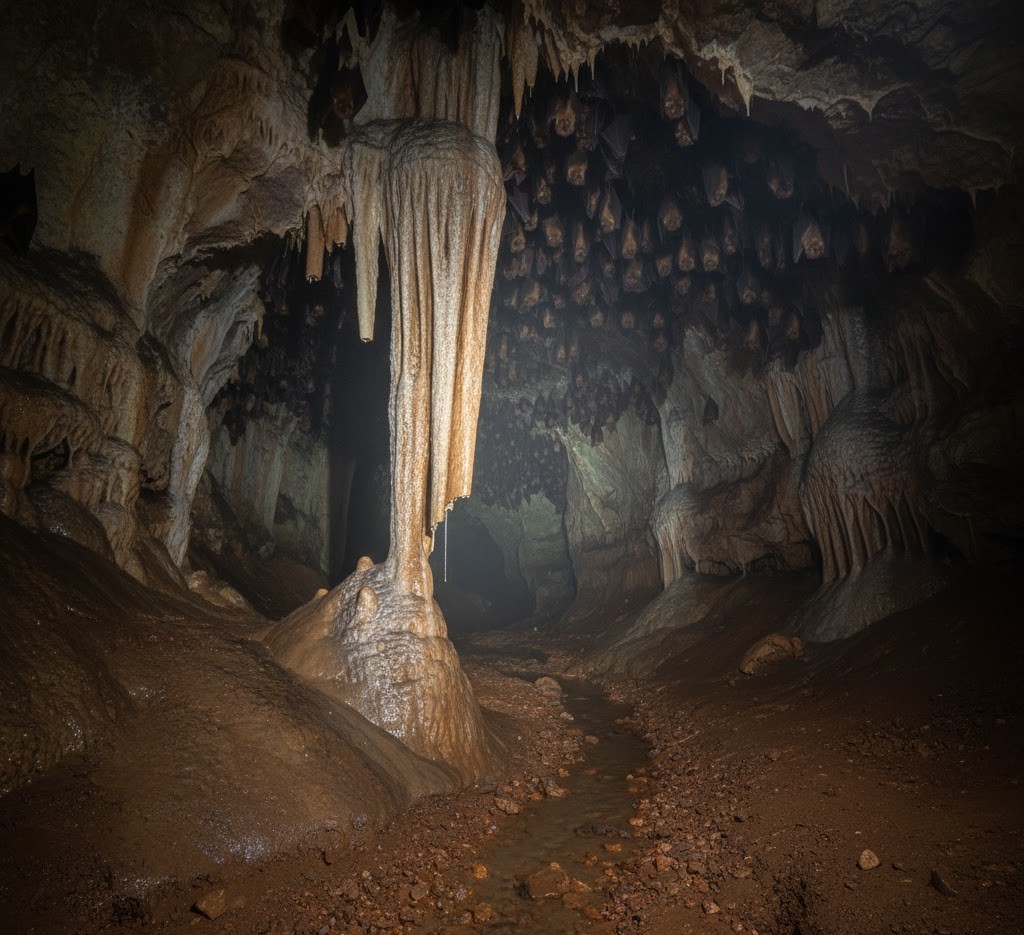
As the name suggests, this cave is a vital sanctuary for several species of bats, some of which are strictly protected at the European level.
- The Bat Colonies: The cave houses thousands of bats, including the Greater Horseshoe Bat (Rhinolophus ferrumequinum). These creatures are essential for the local ecosystem, acting as natural pest controllers for the surrounding forests.
- Cave Micro-Fauna: Beyond the bats, the cave is home to unique species of endemic spiders and beetles that have adapted to live in total darkness.
- Ancient Formations: The interior is decorated with delicate limestone formations—stalactites and stalagmites—that have taken thousands of years to grow, drop by drop.
Legends of the Dark Galleries
The caves in the Caraș Gorges have always been surrounded by mystery. Local legends tell of "Solomonari" (powerful wizards in Romanian mythology) who used these deep, silent galleries to study the secrets of the earth and the weather.
It is said that the bats are the "guardians of the silence," and if they are disturbed by loud voices or bright lights, the spirit of the mountain might close the entrance to the cave forever. Locals still treat these spaces with a mix of respect and ancient fear.
Protecting the Sanctuary
Because you care about the preservation of Romania's beauty, it is important to note:
- Respect the Residents: To protect the bat colonies, visiting is often restricted during the hibernation period (winter) and the breeding season.
- Safety First: As noted in our guidelines, wild animals are unpredictable. Even in caves, one must move quietly and avoid touching the formations or the inhabitants.
1. Where is Peștera Liliecilor located? The cave is located within the Caraș Gorges (Cheile Carașului), part of the Semenic-Cheile Carașului National Park in the Anina Mountains.
2. Is the cave open to the public at all times? To protect the bat colonies, access may be restricted during certain times of the year, particularly during the hibernation period (winter) and the nursery season (early summer). It is always best to check with the National Park administration before planning a trip.
3. Why are there so many bats in this cave? The cave provides a stable microclimate with constant temperatures and high humidity, which is perfect for hibernation. It is one of the most important mating and wintering sites for bats in the Banat region.
4. Are the bats dangerous to visitors? No, the bats are not aggressive and will not attack humans. However, as we always state on this site, wild animals are unpredictable. You should never try to touch, catch, or shine bright lights directly at them, as this causes them immense stress.
5. What should I wear when visiting? The cave environment is damp and the limestone can be very slippery. We recommend wearing sturdy, waterproof hiking boots and a warm jacket, as temperatures inside remain cool around 10°C - 12° even in the summer.
6. Is the cave lit for tourists? No, this is a wild cave. There is no artificial lighting. Visitors must bring their own reliable light sources (headlamps are preferred to keep your hands free for balance).
7. Can I take photos inside the cave? Yes, but please avoid using powerful flashes if bats are present nearby, as the sudden burst of light can wake them from hibernation or disorient them, which can be fatal for them in winter.
