The Golden Jewel of the Carpathians: Yellow Gentian (Ghințura Galbenă) +video and views
Posted: Wed Feb 11, 2026 12:03 pm
Standing tall and proud in the subalpine meadows, the Yellow Gentian (Gentiana lutea), known in Romania as "Ghințura Galbenă," is a magnificent plant that captivates with its striking golden-yellow flowers and impressive height. This perennial herb is not just beautiful; it's steeped in history, folklore, and medicinal tradition.
Where to Find It
The Yellow Gentian thrives in nutrient-rich, sunny subalpine and alpine meadows, typically between 800 and 2,500 meters altitude. You can spot its distinctive towering flower stalks in many Romanian mountain ranges, including: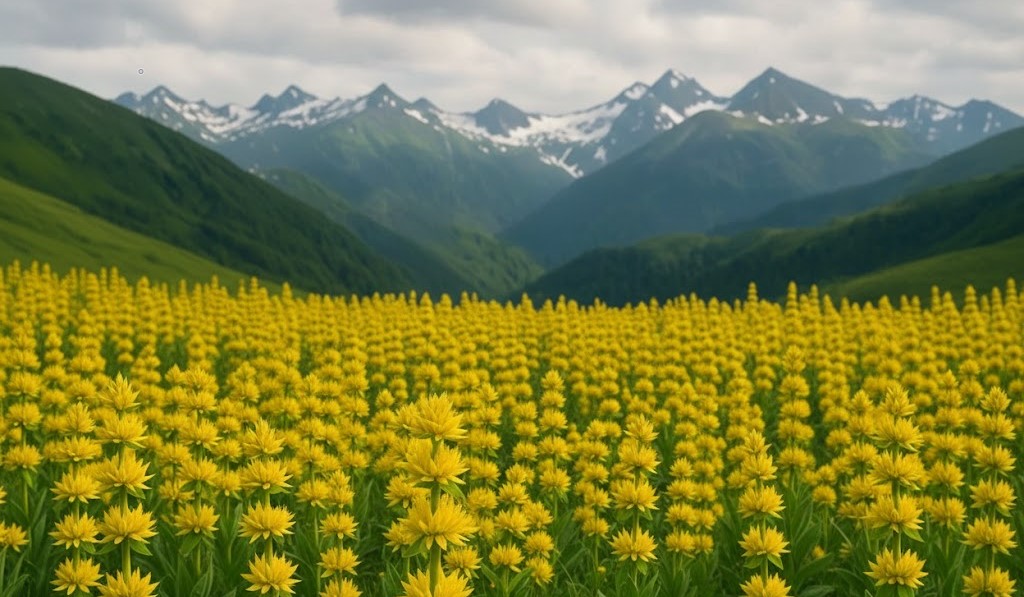 Legends and Traditional Uses
For centuries, the Yellow Gentian has been revered for its potent medicinal properties, especially the bitter root.
The Golden Elixir: In Romanian tradition, the root of the Ghințura was a highly sought-after ingredient for homemade "bitters" or "tinctures." It was believed to be a powerful digestive aid, a tonic for overall health, and a remedy for various ailments, earning it the nickname "regina amăruiului" (the queen of bitterness). Some shepherds even used it to create a strong, invigorating brandy.
Ancient Healer: Legend says that the centaur Chiron, the wisest healer in Greek mythology, used gentian to heal a wound inflicted by a poisoned arrow. This myth highlights the long-standing belief in the plant's curative powers. Its name, Gentiana, is said to come from Gentius, an ancient king of Illyria, who reportedly discovered its medicinal virtues.
A Note on Conservation
While not as critically endangered as some other alpine species, wild populations of Yellow Gentian have diminished due to over-harvesting for medicinal purposes.
A video who present Yellow Gentian (Ghințura Galbenă):
Frequently Asked Questions: Yellow Gentian (Ghințura Galbenă)
How can I identify the Yellow Gentian in the wild? It is a tall plant, reaching up to 1.5 meters, with large, ribbed, oval leaves that grow in pairs. The bright yellow flowers are clustered at the base of the upper leaves, forming a spectacular golden "tower." Be careful not to confuse it with the False Hellebore (Veratrum album), which is toxic and has similar-looking leaves but different flowers.
Why is it called the "Queen of Bitter Herbs"? The root of the Yellow Gentian contains some of the most bitter natural substances known to man (specifically amarogentin). Despite the bitterness, it has been used for millennia to stimulate digestion and treat stomach ailments.
Is it legal to harvest Ghințura from the mountains? No. In many regions of Romania and across Europe, the Yellow Gentian is a protected species. Harvesting the roots from the wild is strictly regulated or prohibited because it takes the plant about 10 years to reach maturity and flower for the first time.
How long does a Yellow Gentian plant live? It is an incredibly resilient perennial. A single plant can live for up to 50 or even 60 years if its habitat remains undisturbed.
Can it be grown in a home garden? Yes, but it requires patience. It needs deep, moist, and well-drained soil, preferably with high organic content. Keep in mind that it grows very slowly and won't produce its iconic yellow flowers for several years.
What is the best time to see them in bloom? The "golden season" for the Yellow Gentian is typically during July and August, when the mountain pastures are at their most vibrant.
Where to Find It
The Yellow Gentian thrives in nutrient-rich, sunny subalpine and alpine meadows, typically between 800 and 2,500 meters altitude. You can spot its distinctive towering flower stalks in many Romanian mountain ranges, including:
- Apuseni Mountains (see more): Known for their rich biodiversity, including various gentian species.
- Făgăraș Mountains (see more): Gracing the vast pastures with its bright color.
- Parâng Mountains (see more): Often found near shepherd huts and old trails.
- Călimani Mountains (see more): Adding to the beauty of the volcanic landscapes.
A vast field of blooming Yellow Gentian (Gentiana lutea) in the Romanian Carpathians, with the sharp, snow-dusted peaks of the Făgăraș Mountains in the background under a dramatic sky.
For centuries, the Yellow Gentian has been revered for its potent medicinal properties, especially the bitter root.
The Golden Elixir: In Romanian tradition, the root of the Ghințura was a highly sought-after ingredient for homemade "bitters" or "tinctures." It was believed to be a powerful digestive aid, a tonic for overall health, and a remedy for various ailments, earning it the nickname "regina amăruiului" (the queen of bitterness). Some shepherds even used it to create a strong, invigorating brandy.
Ancient Healer: Legend says that the centaur Chiron, the wisest healer in Greek mythology, used gentian to heal a wound inflicted by a poisoned arrow. This myth highlights the long-standing belief in the plant's curative powers. Its name, Gentiana, is said to come from Gentius, an ancient king of Illyria, who reportedly discovered its medicinal virtues.
A Note on Conservation
While not as critically endangered as some other alpine species, wild populations of Yellow Gentian have diminished due to over-harvesting for medicinal purposes.
- Protected in many areas: It is often protected in national parks and nature reserves.
- Do not collect without permission: If you plan to use it for medicinal purposes, always ensure you source it responsibly from cultivated plants or with proper permits, or buy it from trusted herbalists. Wild collection is generally discouraged to preserve its natural populations.
A video who present Yellow Gentian (Ghințura Galbenă):
Frequently Asked Questions: Yellow Gentian (Ghințura Galbenă)
How can I identify the Yellow Gentian in the wild? It is a tall plant, reaching up to 1.5 meters, with large, ribbed, oval leaves that grow in pairs. The bright yellow flowers are clustered at the base of the upper leaves, forming a spectacular golden "tower." Be careful not to confuse it with the False Hellebore (Veratrum album), which is toxic and has similar-looking leaves but different flowers.
Why is it called the "Queen of Bitter Herbs"? The root of the Yellow Gentian contains some of the most bitter natural substances known to man (specifically amarogentin). Despite the bitterness, it has been used for millennia to stimulate digestion and treat stomach ailments.
Is it legal to harvest Ghințura from the mountains? No. In many regions of Romania and across Europe, the Yellow Gentian is a protected species. Harvesting the roots from the wild is strictly regulated or prohibited because it takes the plant about 10 years to reach maturity and flower for the first time.
How long does a Yellow Gentian plant live? It is an incredibly resilient perennial. A single plant can live for up to 50 or even 60 years if its habitat remains undisturbed.
Can it be grown in a home garden? Yes, but it requires patience. It needs deep, moist, and well-drained soil, preferably with high organic content. Keep in mind that it grows very slowly and won't produce its iconic yellow flowers for several years.
What is the best time to see them in bloom? The "golden season" for the Yellow Gentian is typically during July and August, when the mountain pastures are at their most vibrant.