The Untamed Strength: The Wild Boar (Mistrețul) of the Carpathians +video and views
Posted: Mon Feb 09, 2026 12:32 pm
If the Red Deer (see more) is the king of the forest, the Wild Boar (Mistrețul) is its rugged, unstoppable force. Known in Romania as Mistrețul, this powerful animal has been a symbol of courage and wild strength since the time of the Dacians.
The Legend of the Great Hunt
In Romanian mythology and history, the Wild Boar is often associated with the "Legend of Dragoș Vodă," the founder of Moldavia. While the legend primarily focuses on the hunting of an Aurochs (Zimbru), the Wild Boar has always been the ultimate test for a hunter's bravery. It was believed that a boar’s tusks held protective powers, and encountering one was a sign of the forest's raw, untamed spirit.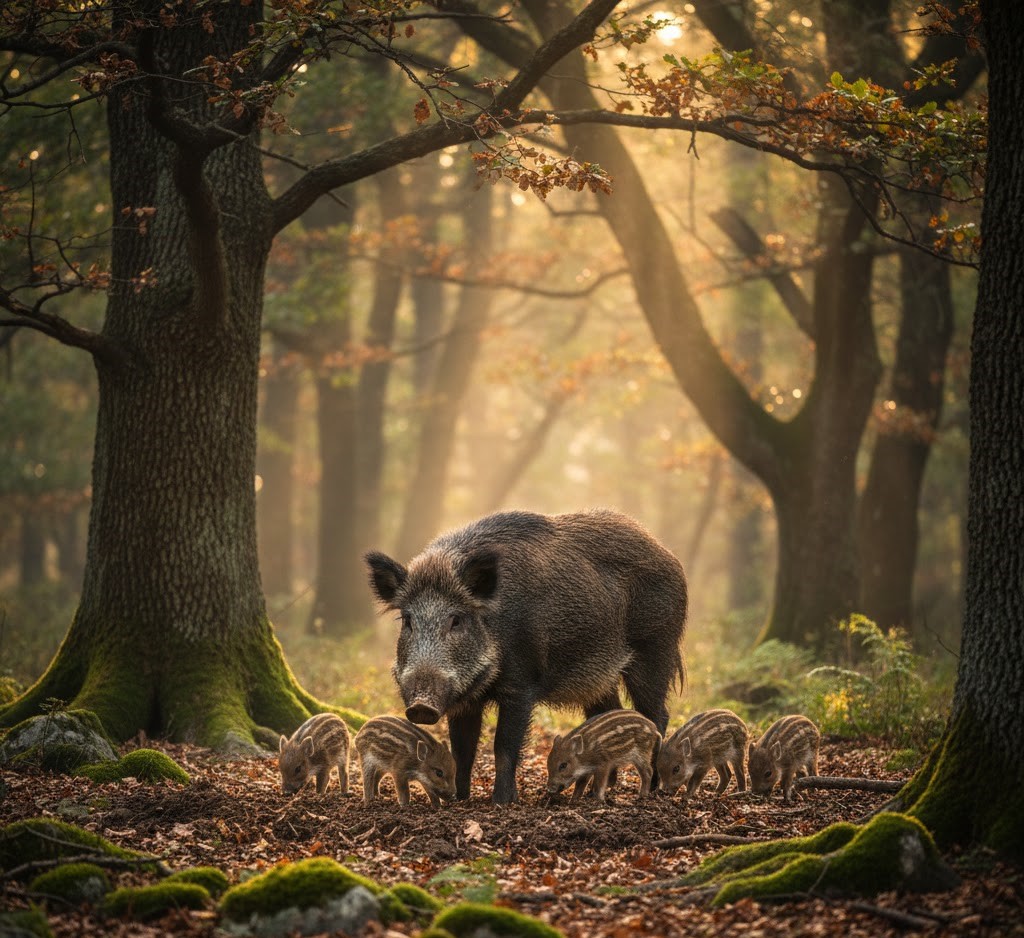 Behavior: The Intelligent Architect of the Soil
Mistreții are surprisingly social and highly intelligent. They live in groups called ciurte, led by an experienced old female.
Wild Boars are highly adaptable and can be found from the Danube Delta all the way up to the mountain slopes. Safety First: Respect the Wild
As we always emphasize on Beautiful Romania, wild animals are unpredictable, and the Wild Boar is no exception.
Frequently Asked Questions: The Wild Boar
1. Are Wild Boars dangerous to hikers?
Generally, wild boars are shy and will avoid human contact. However, wild animals are unpredictable. A boar can become aggressive in two main scenarios: if it is a mother (sow) protecting her piglets, or if the animal is wounded or cornered. Always give them a wide berth and never attempt to approach them for a photo.
2. How can I avoid a surprise encounter?
The best way to stay safe is to make your presence known. While hiking through dense forest or tall reeds, talk loudly, whistle, or use trekking poles that click on stones. Boars have excellent hearing and smell; if they know you are coming, they will usually disappear long before you see them.
3. What should I do if I encounter a Wild Boar?
This is a classic sign of wild boar activity. They use their strong snouts to root through the soil for food like roots, flower bulbs, insects, and truffles. This "tilling" actually helps the forest by aerating the soil and burying seeds.
5. Can I see Wild Boars in the Danube Delta?
Yes! Surprisingly, wild boars are excellent swimmers. In the Danube Delta, they have adapted to the semi-aquatic environment and can be seen swimming between islands or foraging in the reed beds.
6. What is the "striped" coat of the piglets for?
Piglets are born with horizontal light-colored stripes. This is a natural camouflage called "disruptive coloration," which makes them almost invisible when they lie still in the dappled light of the forest floor. They lose these stripes after about 4–6 months as they grow their coarse, dark adult fur.
The Legend of the Great Hunt
In Romanian mythology and history, the Wild Boar is often associated with the "Legend of Dragoș Vodă," the founder of Moldavia. While the legend primarily focuses on the hunting of an Aurochs (Zimbru), the Wild Boar has always been the ultimate test for a hunter's bravery. It was believed that a boar’s tusks held protective powers, and encountering one was a sign of the forest's raw, untamed spirit.
A female wild boar standing guard over her five striped piglets as they forage on a mossy, sunlit forest floor in Romania.
Mistreții are surprisingly social and highly intelligent. They live in groups called ciurte, led by an experienced old female.
- The "Tilling" of the Forest: You will often see patches of earth turned over as if by a plow. This is the boar's work, searching for roots, tubers, and insects, a process that actually helps the forest regenerate.
- The Protective Mother: A sow with her "striped" piglets (pui dungați) is one of the most protective parents in the wild.
Wild Boars are highly adaptable and can be found from the Danube Delta all the way up to the mountain slopes.
- The Danube Delta (see more): They are excellent swimmers and can often be seen crossing channels or foraging in the reed beds.
- The Sub-Carpathian Hills: Areas with oak and beech forests (rich in acorns and beech mast) are their favorite pantries.
- Băneasa or Cernica Forests: Even near Bucharest, these elusive animals thrive in the dense woodlands.
 Safety First: Respect the Wild
As we always emphasize on Beautiful Romania, wild animals are unpredictable, and the Wild Boar is no exception.
- Give them space: A boar will usually run if it hears you coming. However, if cornered or if a mother feels her piglets are threatened, they can charge with surprising speed.
- Make noise: If you are hiking in dense brush, talk or wear a small bell. Surprising a boar is the most common cause of conflict.
- Watch the tusks: Mature males (solitari) have sharp tusks that can cause serious injury. Always observe from a safe distance or a dedicated wildlife hide.
Frequently Asked Questions: The Wild Boar
1. Are Wild Boars dangerous to hikers?
Generally, wild boars are shy and will avoid human contact. However, wild animals are unpredictable. A boar can become aggressive in two main scenarios: if it is a mother (sow) protecting her piglets, or if the animal is wounded or cornered. Always give them a wide berth and never attempt to approach them for a photo.
2. How can I avoid a surprise encounter?
The best way to stay safe is to make your presence known. While hiking through dense forest or tall reeds, talk loudly, whistle, or use trekking poles that click on stones. Boars have excellent hearing and smell; if they know you are coming, they will usually disappear long before you see them.
3. What should I do if I encounter a Wild Boar?
- Stay calm: Do not scream or make sudden movements.
- Back away slowly: Face the animal but do not make direct eye contact, which can be seen as a challenge.
- Find a high spot: If the animal charges (which is very rare), try to climb a tree or get behind a large boulder.
This is a classic sign of wild boar activity. They use their strong snouts to root through the soil for food like roots, flower bulbs, insects, and truffles. This "tilling" actually helps the forest by aerating the soil and burying seeds.
5. Can I see Wild Boars in the Danube Delta?
Yes! Surprisingly, wild boars are excellent swimmers. In the Danube Delta, they have adapted to the semi-aquatic environment and can be seen swimming between islands or foraging in the reed beds.
6. What is the "striped" coat of the piglets for?
Piglets are born with horizontal light-colored stripes. This is a natural camouflage called "disruptive coloration," which makes them almost invisible when they lie still in the dappled light of the forest floor. They lose these stripes after about 4–6 months as they grow their coarse, dark adult fur.