
The Myth of the Two Capitals
One of the most common mistakes travelers make is confusing this site with Sarmizegetusa Regia.
- The Difference: Regia was the mountain stronghold of the Dacian kings (located 40 km away). Ulpia Traiana was the Roman capital founded by Emperor Trajan around 108 AD.
- The Name: Emperor Hadrian later added the name "Sarmizegetusa" to the Roman city to honor the legacy of the conquered land, creating a bridge between the two civilizations.
The Legend of the Hidden Hoards
Local legends speak of "The Curse of the Dacian Gold." It is said that when the Romans arrived, the Dacian King Decebalus hid his massive treasure under the bed of the Sargetia River. For centuries, the ruins of Ulpia Traiana were picked apart by treasure hunters and villagers alike. In fact, many medieval churches in the area, like the famous Densuș Church, were built using stones and marble statues "borrowed" from the Roman ruins. If you look closely at the walls of nearby local houses, you might still see a 2,000-year-old Roman inscription staring back at you!
Flora & Fauna: Where History Meets the Wilderness
The archaeological site is set against the stunning backdrop of the Retezat Mountains.
- Flora: The ruins are surrounded by wild plum and apple trees. In late spring, the stone walls are covered in mosses and delicate wildflowers like wild pansies and bellflowers.
- Fauna: Keep an eye on the sky for the Golden Eagle or the Common Buzzard. Near the site, the Hațeg Bison Reserve offers a chance to see the legendary European Bison (see more).
- Traveler’s Note: The surrounding forests are home to deer and foxes, but also larger predators. Remember, wild animals are unpredictable—always stick to the marked paths when exploring the hills around the ruins.
- Ticket Price: Approx. 20-30 RON ( 4-6 EURs - Cash and Card usually accepted).
- Best Time to Visit: May to October for the best weather.
- Nearby Must-See: The Densuș Church (10 km away)—the oldest stone church in Romania, built with Roman ruins.
Frequently Asked Questions (FAQ)
1. How do I get there? The site is located in the village of Sarmizegetusa (Hunedoara County), right on the DN68 national road. It’s easily accessible by car from Deva (45 min) or Timișoara (2 hours).
2. What are the must-see ruins?
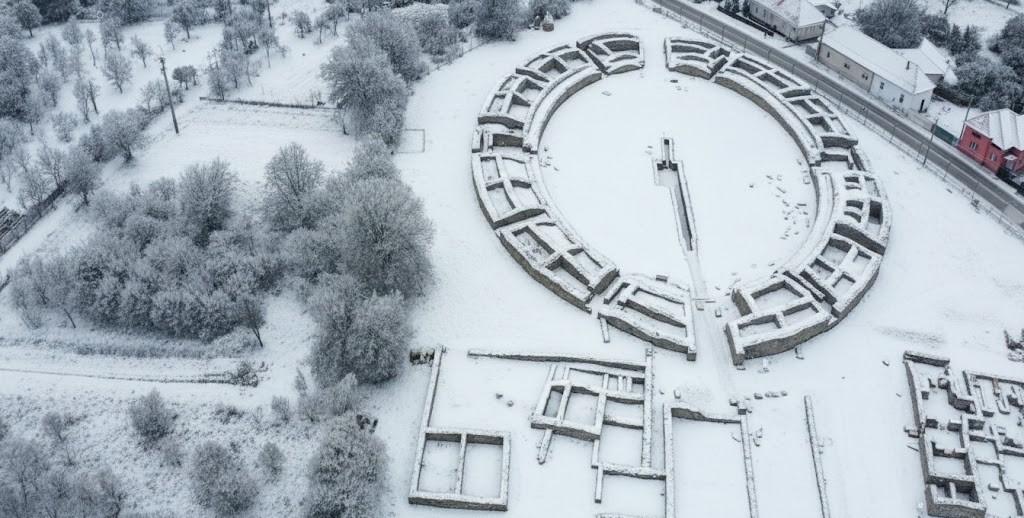
- The Amphitheater: Once holding 5,000 spectators for gladiator fights.
- The Great Temple: Dedicated to multiple gods, reflecting the religious diversity of the empire.
- The Forum: The political heart of the city, where you can still see the original stone paving.
4. Can I visit both Sarmizegetusas in one day? Technically yes, but it’s a long day. Ulpia Traiana is easy to walk through. Sarmizegetusa Regia requires a drive deep into the Orăștie Mountains and a short hike. We recommend dedicating a full day to each for the best experience.
5. Is the site family-friendly? Absolutely. The open-air complex is great for children to explore, and the flat terrain makes it a much easier walk than the Dacian fortresses in the mountains.
