
A Glacial Masterpiece
Lacul Gâlcescu is a glacial cirque lake, formed by the powerful forces of ancient glaciers that carved out the dramatic valleys and peaks of the magnificent Parâng Massif (Click HERE to see more). Its crystal-clear, deep blue waters reflect the surrounding jagged peaks, creating a mirror image that is simply mesmerizing. At an altitude of approximately 1,925 meters, it's part of a complex of several smaller glacial lakes, all contributing to the area's wild, untamed beauty.
The lake is a protected natural monument and a strict scientific reserve, home to unique flora and fauna adapted to the harsh alpine environment. Hiking trails leading to Gâlcescu are well-maintained, but they demand a reasonable level of fitness, rewarding trekkers with unparalleled views and a true sense of wilderness.
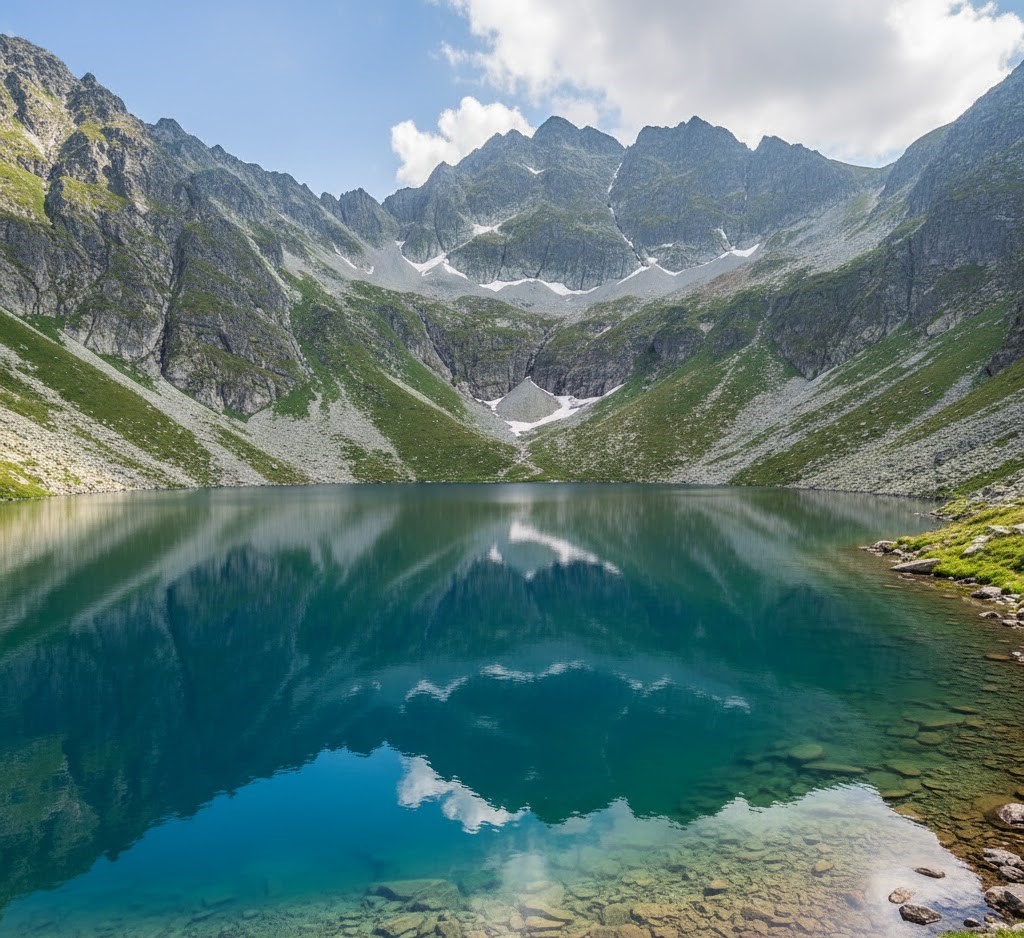
The Legend of the Maiden and the Mountain Spirits:
Like many ancient places in Romania, Lacul Gâlcescu is shrouded in local folklore. One popular legend tells of a beautiful young shepherdess named Ileana, who grazed her flock in the valleys below. She was renowned for her kindness and the enchanting melodies she played on her flute, which echoed through the mountains, charming even the reclusive mountain spirits, known as "iele."
One summer, a powerful drought gripped the land, drying up streams and wilting pastures. Ileana, heartbroken for her thirsty flock, ventured higher and higher into the mountains, searching for water. The mountain spirits, moved by her compassion and pure heart, decided to help her. They gathered all their tears of sorrow for the parched land and channeled them into a deep hollow, creating the pristine lake we know today as Gâlcescu.
It is said that on clear, quiet evenings, if you listen closely, you can still hear the faint, melancholic notes of Ileana's flute carried by the wind, a reminder of her sacrifice and the spirits' gift. Some even claim that the deeper, bluer hues of the lake's water are a reflection of the spirits' profound sorrow and their boundless generosity.
Visiting Lacul Gâlcescu
For adventurers and nature lovers, a trip to Lacul Gâlcescu is an unforgettable experience. The most common access point is from Obârșia Lotrului, followed by a challenging but rewarding hike. Remember to prepare adequately for alpine conditions: wear sturdy hiking boots, carry sufficient water and food, and be aware of rapidly changing weather.
Whether you're drawn by its geological grandeur, its ecological significance, or the whisper of ancient legends, Lacul Gâlcescu promises an escape into a world where nature reigns supreme and time seems to stand still. Come and discover this magnificent jewel of the Parâng Mountains for yourself!
A stunning 4K video presenting Gâlcescu Lake (Lacul Gâlcescu) and surrounding landscapes:
Frequently Asked Questions (FAQ)
1. How do I get to Lacul Gâlcescu?
The most popular route starts from Obârșia Lotrului ,near the stunning Transalpina road (Click HERE to see more). From there, you follow the forest road and then the marked trail (usually a red triangle or red dot) through the forest and up to the glacial cirque.
2. How long does the hike take?
The hike from Obârșia Lotrului to Lacul Gâlcescu typically takes between 3 to 4 hours one way, depending on your pace and the weather conditions. It is a moderate hike but requires a decent level of fitness.
3. Can I camp near the lake?
Yes, camping is permitted and Lacul Gâlcescu is a famous spot for mountain tents. However, please remember that it is a protected area. You must "Leave No Trace"—take all your trash back with you and avoid making large fires.
4. Is there any dangerous wildlife in the area?
As you know, wild animals are unpredictable. The Parâng Mountains are home to brown bears and vipers. It is recommended to make noise while hiking to avoid surprising a bear and to wear high-top boots and long trousers to protect against snakes.
5. What is the best time to visit?
The best time to visit is from late June to September. Before June, many trails might still be covered in snow, making the hike dangerous. In autumn, the weather can change rapidly, and temperatures drop significantly at night.
6. Is the water in the lake drinkable?
While the water is glacial and looks crystal clear, it is always safer to use a filtration system or boil it if you plan to drink it, as livestock (sheep) often graze in the surrounding alpine pastures during summer.
