
A Sanctuary of Biodiversity
Romania’s forests are a biodiversity hotspot, providing a sanctuary for a staggering array of wildlife. These woods hold the largest populations of brown bears, wolves, and lynx in Europe (outside of Russia).
- The Guardians of the Woods: Roughly 6,000 brown bears roam the Carpathian Mountains.
- The Flora: From the massive secular oaks of the lowlands to the resilient spruce and fir trees of the high peaks, the variety of plant life is immense, including rare species like the Lady’s Slipper orchid (see more).
- The Lungs of Europe: These forests act as massive carbon sinks. By absorbing vast amounts of CO2 they play a critical role in regulating the regional climate and mitigating the effects of global warming.
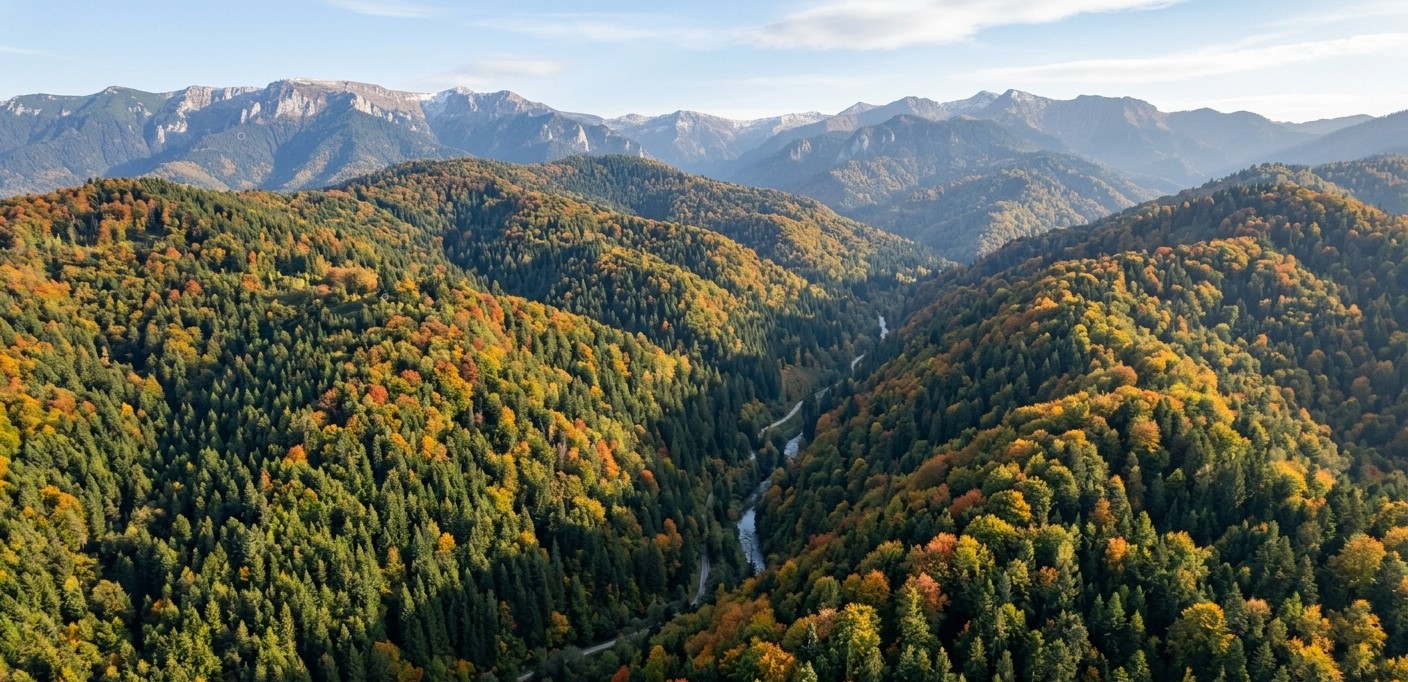
A Global Treasure: UNESCO World Heritage Forests
It is a little-known fact for many travelers that Romania protects some of the most valuable ecosystems on the planet. Significant portions of Romania’s ancient and primeval beech forests are officially recognized as UNESCO World Heritage Sites. These protected areas, such as those in Izvoarele Nerei, Cheile Nerei-Beușnița (see more), or Cozia, are considered "natural cathedrals." They have remained virtually untouched by human activity for centuries, allowing researchers and nature lovers to witness how European landscapes looked thousands of years ago. These UNESCO sites are not just national pride; they are a universal heritage that Romania guards for the entire world.
Legends and Folk Tales
In Romanian culture, the forest is often personified. It is referred to as "Codru-i frate cu Românul" (The forest is the brother of the Romanian), reflecting a deep, historical bond.
- Muma Pădurii (The Mother of the Forest): One of the most famous legends tells of a wild, ancient spirit who protects the woods. She can appear as a frightening old woman or a beautiful maiden, depending on how a traveler treats the trees. She punishes those who waste wood or harm animals but helps those who respect nature.
- The Solomonari: Local folklore speaks of powerful sorcerers who lived in the deepest parts of the mountains, said to control the clouds and the rains, drawing their power from the untamed forest wilderness.
As of 2026, the forested area in Romania covers approximately 7 million hectares, which represents about 30% of the country's total territory. While this is a significant portion, the preservation of these lands remains a top priority.
Combating Illegal Logging
It is no secret that Romania has faced challenges with illegal logging. However, significant strides are being taken to protect this heritage:
- Strict Oversight: The Romanian state has increased efforts through intensified checks by the Police and the National Forestry Guard (Ocolul Silvic).
- Community Power: Technology has become a key ally. Applications like "The Forest Inspector" (Inspectorul Pădurii) (see more) allow any citizen or tourist to check the license plate of a timber-carrying vehicle or the consignment note. This real-time verification confirms if a transport is legal, turning every person with a smartphone into a guardian of the forest.
- The Oldest Tree: Romania is home to several "secular" trees, some over 500 to 800 years old. Standing beneath a tree that was a sapling during the Middle Ages is a humbling experience.
- Underground Forests: In some karst regions of the Carpathians, the forests hide immense cave systems, some of which contain fossilized remains of the extinct Cave Bear (Ursus spelaeus).
- The Scent of History: Walking through a Romanian beech forest in the autumn is often described as walking through a golden cathedral due to the way the light filters through the tall, straight trunks.
The importance of the Romanian forest extends far beyond national borders. As a primary ecosystem in the European Union, its health directly impacts the air quality and water cycles of the entire continent. For the global community, these forests represent one of the last places where nature still functions as it did thousands of years ago—raw, powerful, and essential for the survival of our planet's climate.
Whether you are a hiker, a photographer, or a lover of myths, the forests of Romania offer a journey into the wild heart of the world. Remember to tread lightly, respect the silence, and keep a watchful eye on the horizon.
A informative video which presenting the bigest Forests of Romania (please, activate subtitle in the player):
Frequently Asked Questions: Romania's Forests
1. What percentage of Romania is covered by forests?
As of 2026, forests cover approximately 7 million hectares, which is about 30% of Romania's total land area. The goal of ongoing national programs is to protect these areas and increase reforestation, especially in regions vulnerable to climate change.
2. What are "Virgin Forests" and why are they famous in Romania?
Romania possesses the largest surface of virgin and quasi-virgin forests in Europe (excluding Russia). These are ancient woodlands that have developed naturally for centuries without human intervention. They are essential for biodiversity, providing a home to rare species that cannot survive in younger, managed forests.
3. Which wild animals can I encounter in the Romanian woods?
The Carpathian Mountains are a sanctuary for Europe’s most iconic wildlife:
Brown Bears (see more): Romania has one of the highest concentrations in the world.
Wolves (see more): Large, healthy packs roam the deep wilderness.
Lynx (see more): These elusive cats are the "ghosts" of the Romanian forest.
Bison (see more): Once extinct in the region, the European Bison has been successfully reintroduced in several mountain ranges.
4. How can I verify if a timber truck is transporting wood legally?
Transparency is key in Romania. You can use the official "Inspectorul Pădurii" (Forest Inspector) app. By entering the license plate of any truck carrying wood, the system tells you instantly if the transport has a valid legal permit. If it doesn't appear, it can be reported to the authorities immediately.
5. Are the forests safe for hiking?
Yes, but they are truly wild. If you are hiking, it is recommended to stay on marked trails, make noise to avoid surprising wildlife, and always let someone know your route. The forests are beautiful but should be treated with respect.
6. What is "Muma Pădurii"?
In local folklore, "Muma Pădurii" (The Mother of the Forest) is a legendary spirit who protects the trees and animals. While she can be a frightening figure to those who disrespect nature, she is considered a guardian of the wild’s balance.
7. How do Romanian forests help the global climate?
These forests act as a massive carbon sink, absorbing millions of tons of CO2 every year. Because many of these forests are old-growth, they are far more efficient at regulating temperature and air quality than typical industrial plantations, making them vital for the entire continent.
8. What is the most common tree in Romania?
The Beech (Fagus sylvatica) (see more) is the most widespread, making up about 33% of the forest. You will also find large areas of Spruce and Fir in the higher mountains, and ancient Oaks in the rolling hills and plains.
