
Biodiversity: A Resilient Ecosystem
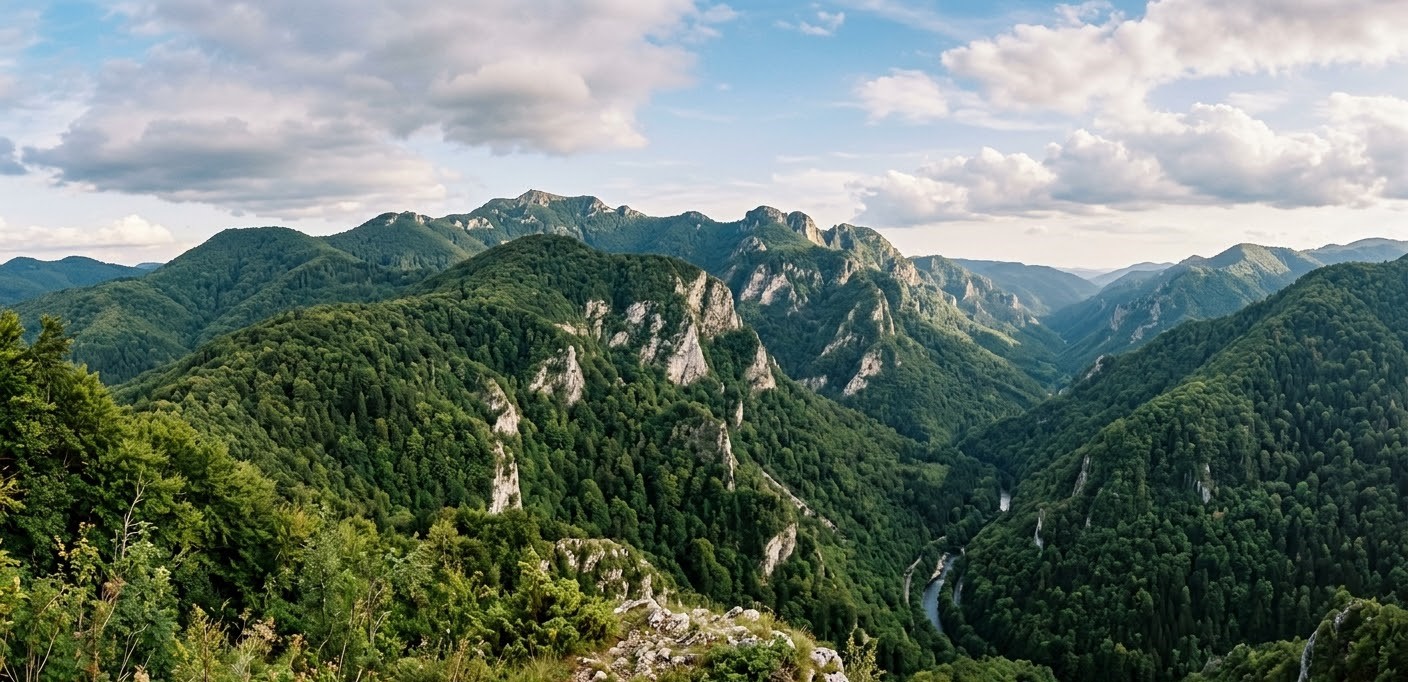
The Anina Mountains are part of the Semenic-Cheile Carașului National Park, a haven for rare species and ancient forests.
- Ancient Beech Forests: These mountains house UNESCO-protected primary beech forests (see more), some of the last remaining virgin forests in Europe.
- The Wild Residents: It is a prime territory for large carnivores like the Eurasian lynx, brown bears, and wolves (see more).
- The Floral Crown: Keep an eye out for the Banat Iris and the Wild Orchid, which bloom in the karst plateaus during the spring.
Legends and Stories: The Whispers of the Cave
The Banat region is rich in folklore, often blending the spiritual with the geological.
The Legend of the Thief’s Cave (Peștera Hoților): Local stories tell of outlaws (haiducs) who used the complex cave systems to hide from imperial armies. It is said that some of their treasures remain buried deep within the limestone galleries, protected by "the spirits of the mountain."
The Water Spirits: Many local legends speak of the "Vâlve"—mystical feminine entities that guard the springs and waterfalls. If you hear a melody near a waterfall that sounds too perfect to be just falling water, the locals might tell you it’s a Vâlvă singing.
Fun Facts for the Curious Traveler
- Europe’s Oldest Modern Humans: In 2002, the oldest remains of modern humans in Europe (dating back roughly 40,000 years) were discovered in Peștera cu Oase (The Cave with Bones) (see more) within these mountains.
- The Semmering of Banat: The Oravița-Anina railway is the oldest mountain railway in Romania. Known as the "Banat Semmering," it features 14 tunnels and 10 viaducts, offering breathtaking views that haven't changed much since 1863.
- A Land of a Thousand Caves: The Anina Mountains have one of the highest densities of caves in Romania, with over 800 discovered so far.
- Highest Peak: Leordiș Peak (1160 meters).
- Geology: Predominantly Jurassic and Cretaceous limestone, which explains the spectacular karst topography (gorges, sinkholes, and caves).
- Climate: A sub-Mediterranean influence, meaning winters are slightly milder and summers are warmer than in the Northern Carpathians.
- Must-See Landmark: Bigăr Waterfall (see more), once famously listed as one of the most unique waterfalls in the world, is located at the southern edge of these mountains.
For a foreigner, the Anina Mountains offer "Slow Travel" at its best. It isn't about high-altitude climbing; it’s about hiking through the Caraș Gorges, exploring the Comarnic Cave, and experiencing a part of Europe where the tracks of a wolf are more common than the tracks of a car.
A beautiful aerial video presenting Anina Mountains (Munții Aninei) area:
Frequently Asked Questions: Anina Mountains (Munții Aninei)
Navigating the limestone heart of the Banat region can be as mysterious as it is beautiful. Here are the most common questions travelers ask when planning a trip to the Anina Mountains.
Logistics & Access
How do I get to the Anina Mountains? The best gateway cities are Reșița and Oravița. Most international travelers fly into Timișoara Traian Vuia Airport (TSR), which is about a 2-hour drive from the mountains. Renting a car is highly recommended as public transport to the trailheads can be infrequent.
When is the best time to visit? * May to June: Best for blooming wildflowers and high-volume waterfalls.
September to October: Ideal for autumn colors in the ancient beech forests and cooler hiking temperatures.
Winter: Beautiful for frozen waterfalls, but many caves and high-altitude trails may be inaccessible without professional gear.
Hiking & Exploration
What are the "must-see" landmarks? 1. Cheile Carașului (Caraș Gorges): One of the longest and wildest gorges in Romania.
2. Comarnic cave (Peștera Comarnic) (see more): One of the most beautiful "wild" caves (requires a guide).
3. Oravița-Anina Railway: A stunning historical train ride through the mountains.
4. Bigăr & Beușnița (see more) Waterfalls: Famous for their turquoise waters and moss-covered falls.
Are the trails difficult? Most trails in the Anina Mountains are of easy to moderate difficulty. The peaks are not extremely high (averaging 800m–1,100m), but the terrain is "karstic"—meaning it can be rocky, slippery, and full of steep sinkholes. Sturdy hiking boots are a must.
Caves & Wildlife
Can I enter any cave I find? No. While there are over 800 caves, many are protected or dangerous for amateurs. Famous caves like Peștera cu Oase (where Europe's oldest human remains were found) are closed to the public for scientific research. Always stick to marked tourist caves like Comarnic or Vârghiș.
Is it safe regarding wild animals? Yes, but you are in Brown Bear and Wolf territory. While attacks are extremely rare, it is best to:
Make noise while hiking (talk or use a bell).
Carry bear spray.
Avoid hiking alone at dusk or dawn.
The "Banat Semmering" Train
How do I ride the Oravița-Anina train? The train usually runs once a day (out and back). It is a slow, nostalgic journey taking about 2 hours to cover 34km. It is highly recommended to book tickets in advance through the CFR Călători website, especially during summer weekends.
Travel Tips
Is there a fee to enter the National Park? The Anina Mountains are part of the Semenic-Cheile Carașului National Park. There is often a small environmental fee (usually around 10-20 RON) [2-4 EUR] payable at park entrances or via SMS in certain areas.
What should I wear? Even in summer, caves maintain a constant temperature of about 10°C (50°F). If you plan on exploring underground, bring a light jacket and waterproof shoes, as many caves are damp or have active water streams.
