
Architecture and Heritage: The Brâncovenesc Mastery
The palace is famous for its harmonious proportions and intricate stone carvings.
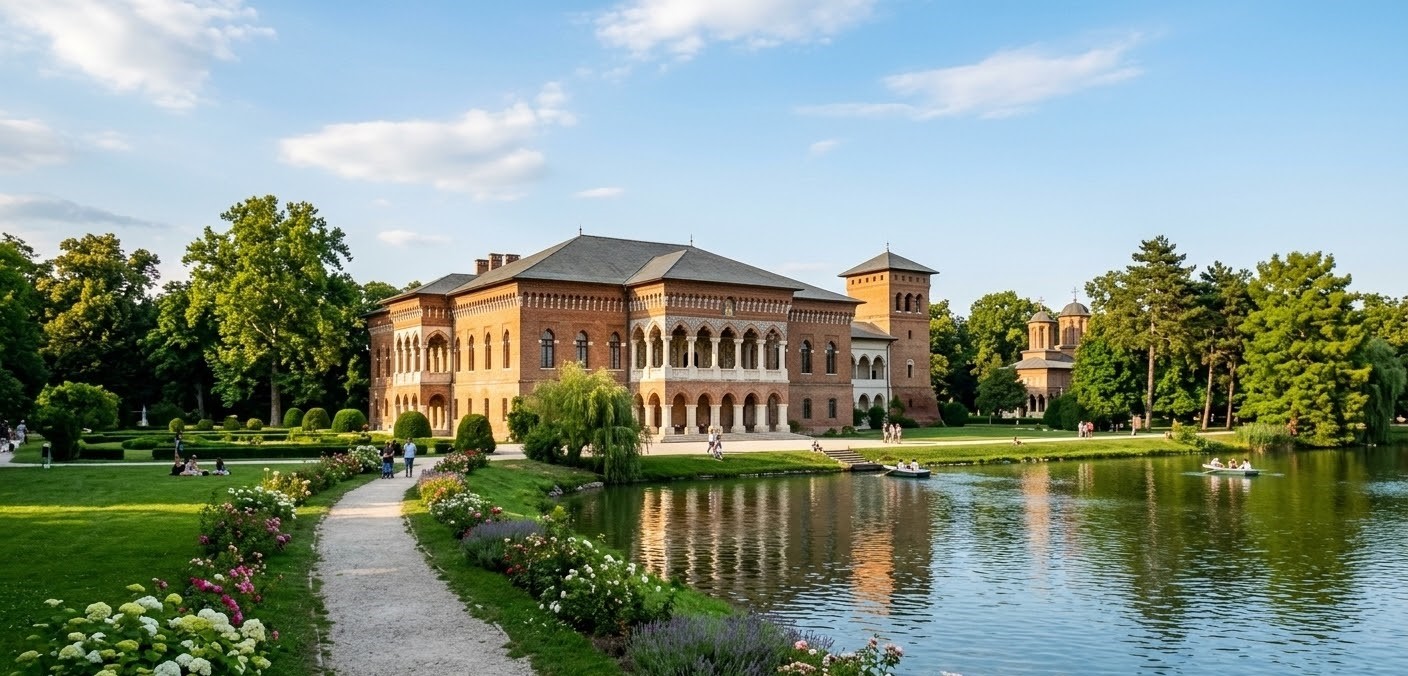
- The Loggia: The most iconic feature is the Venetian-style loggia overlooking the lake. Its delicate columns and floral stone ornaments are masterpieces of 18th-century craftsmanship.
- The "Caimacam" Residence: Beyond the main palace, the complex includes a guesthouse, an ice house (ghețărie), and the family church of St. George, all enclosed within thick defensive walls.
- Bibescu’s Restoration: After being devastated by Ottoman attacks and fires, the palace was brilliantly restored in the early 20th century by Martha Bibescu, a famous French-Romanian writer and socialite, who turned it into a meeting place for European royalty and intellectuals.
The history of the palace is deeply tied to a tragic and heroic end.
Legend says that the wealth and beauty of the palace sparked the envy of the Ottoman Sultan. In 1714, Constantin Brâncoveanu was arrested and taken to Constantinople along with his four sons. They were given the choice to convert to Islam or face death. They refused to renounce their faith and were executed. Local lore suggests that the spirits of the Brâncoveanu family still watch over the gardens, ensuring that the Romanian spirit and culture they died for remain preserved within these red-brick walls.
Fun Facts for the Curious
- The Red Brick Mystery: The distinct red bricks used for the palace were made from local clay and have survived for over 300 years, retaining their vibrant color through centuries of wars and weather.
- A Movie Star: Due to its fairytale appearance and well-preserved grounds, Mogoșoaia Palace is a frequent filming location for international historical dramas and fashion shoots.
- Martha’s Secret Garden: Martha Bibescu planted rare varieties of irises and roses, some of which were brought from the famous gardens of France, making the park one of the most romantic spots near the capital.
- Year of Completion: 1702.
- Architectural Style: Brâncovenesc (Romanian Renaissance).
- Location: Mogoșoaia, Ilfov County.
- Key Components: The Palace, the Kitchen (Cuina), the Water Tower, and St. George’s Church.
Frequently Asked Questions: Mogoșoaia Palace
How far is Mogoșoaia Palace from Bucharest?
The palace is located about 15 kilometers (9 miles) northwest of Bucharest's city center. It is a very accessible getaway, taking roughly 30 to 45 minutes by car, depending on traffic.
What is the "Brâncovenesc" style?
It is a unique architectural style that originated in Romania at the end of the 17th century. It is a synthesis of Byzantine and Ottoman elements mixed with Late Renaissance and Baroque influences from Italy. You can recognize it by the rich stone carvings, arched loggias, and elegant columns.
Can I visit the interior of the palace?
Yes, the palace houses the Museum of Brâncovenesc Art. You can visit the vaulted cellar, the Great Hall, and the royal chambers, which display historical furniture, rare books, icons, and traditional costumes.
Is the park open every day?
Generally, the Mogoșoaia Park is open daily from sunrise to sunset and is free to enter. It is a popular spot for jogging, walking, and picnics. However, the museum inside the palace has specific visiting hours and usually requires a ticket.
What is the best time to visit?
Spring and early summer (April–June) are beautiful because the gardens are in full bloom. Autumn is also spectacular when the old trees in the park turn golden, contrasting with the red brick of the palace.
Are there any other buildings to see in the complex?
Yes, the complex includes several interesting structures:
- St. George’s Church: Built in 1688, containing the family tomb.
- The Kitchen (Cuina): A separate building used to keep the heat and smells of cooking away from the main palace.
- The Bibescu Family Vault: A neo-Byzantine chapel located in the park.
- The Greenhouse: Used today for art exhibitions and events.
Photography is allowed in the gardens and outside the buildings. For professional photo shoots or taking pictures inside the museum, there is usually an additional fee or a requirement for special permission.
