
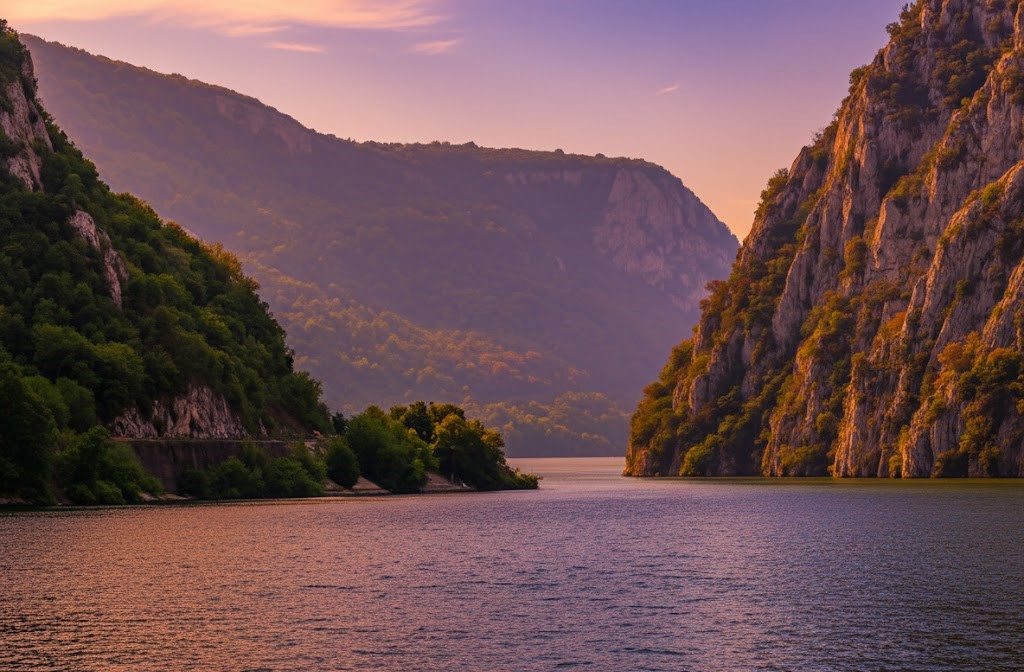
1. Geographic Facts: A Natural Record-Breaker
The Gorges are part of the Iron Gates Natural Park and are divided into two distinct sections: The Great Cauldrons and The Small Cauldrons.
-Location: Mehedinți County, Romania, situated between the villages of Eșelnița and Dubova.
-Total Length: Approximately 9 km.
-Record Depth: In this area, the Danube reaches staggering depths of up to 75–80 meters.
-Minimum Width: The river narrows down to about 150–200 meters, creating a "boiling" effect of the water due to powerful currents—hence the name "The Cauldrons."
A 4K video who present The Danube Gorges (Cazanele Dunarii):
2. Must-See Landmarks
This region is a fascinating blend of history, legends, and wild landscapes. Here is what you cannot miss:
-The Rock Sculpture of Decebalus
The most famous attraction is the monumental rock carving of the last Dacian King, Decebalus. Standing at 55 meters high, it is the tallest stone sculpture in Europe. It took 12 sculptor-climbers ten years to finish this masterpiece.
-Mraconia Monastery
Often called the "monastery under the water," the current church stands on the site of an ancient monastery that was flooded during the construction of the Iron Gates I Dam. It sits right on the water's edge, offering a serene and spiritual atmosphere.
-Tabula Traiana
Located on the Serbian bank, directly opposite the Decebalus sculpture, is a 2,000-year-old Roman memorial plaque. It commemorates the Roman military road built by Emperor Trajan during his conquest of Dacia.
Ponicova Cave & Veterani Cave Click HERE to read more about Ponicova and Veterani
-Ponicova: The largest cave in the gorge, featuring galleries that connect directly to the Danube.
-Veterani: A cave with a rich military history, used in the past as a strategic fortification. It is only accessible by boat.
A 4K video who presenting The Rock Sculpture of Decebalus ,Mraconia Monastery and a part of The Danube Gorges
3. Top Things to Do
Take a Boat Tour: This is the only way to enter the caves and get a close-up view of the Tabula Traiana.
Hike to Ciucaru Mare: A relatively easy trail that leads you to the mountain plateau above the Gorges. This is where you will find the most iconic panoramic views of the river's bend.
Visit the Iron Gates I Dam: Located nearby, it is a living lesson in engineering and history.
 The Legends of the Danube Gorges (Cazanele Dunării)
1. The Legend of the Ponicova Cave (The Serpent of the Danube)
The Legend: Deep within the limestone walls of the Gorges lies the Ponicova Cave, accessible only by boat. The Story: Ancient lore speaks of a giant water serpent (a "Balaur") that lived in the dark depths of the cave. It was said that the serpent controlled the whirlpools of the Danube. To appease the beast and ensure safe passage through the dangerous narrow sectors, sailors would offer sacrifices. Even today, when the water "boils" in the Great Cauldrons, locals jokingly say the old serpent is turning in its sleep.
2. The Legend of the Decebalus Rock Sculpture
The Legend: While the massive face of Decebalus is a modern masterpiece (finished in 2004), it sits on a site steeped in ancient history. The Story: Legend says that the last king of the Dacians, Decebalus, hid a massive treasure in a cave near the river before the Romans conquered the territory. To keep it safe, he supposedly diverted a river and killed the workers who knew the secret. While many have searched the underwater caves of the Gorges, the "Dacian Gold" remains a mystery, guarded by the stone gaze of the king.
3. The "Boiling" Waters (The Cauldrons)
The Legend: Why does the water look like it’s boiling even on a calm day? The Story: Before the Iron Gates dam was built, navigation here was terrifying. Sailors believed that the abyss beneath the water was so deep it reached the underworld, and the rising bubbles and whirlpools were caused by spirits trapped in the currents. Scientifically, it's caused by the riverbed narrowing from 2 kilometers to just 150 meters, but the legend of the "spirits of the deep" is much more cinematic for travelers.
Traveler’s Tips
Best Time to Visit: May to September, to enjoy the boat rides and sunny weather.
Getting There: The easiest way is via the DN57 road, which winds along the Danube between Orșova and Moldova Nouă.
 Frequently Asked Questions: Visiting the Danube Gorges (Cazanele Dunării)
1. What exactly are "Cazanele Dunării"?
The Danube Gorges (Cazanele Dunării) represent the most spectacular sector of the Danube River's passage through the Carpathian Mountains. Divided into Cazanele Mari (Great Gorges) and Cazanele Mici (Small Gorges), this area is part of the Iron Gates Natural Park (Parcul Natural Porțile de Fier). Here, the river narrows significantly, creating a powerful current that once looked like it was "boiling" (hence the name "Cazane" – Cauldrons).
2. How can I see the Rock Sculpture of Decebalus?
The massive statue of the last king of Dacia, Decebalus, is the tallest rock sculpture in Europe. You can see it:
By boat: Most boat tours depart from Mraconia Bay or the town of Orșova.
By car: It is visible from the main road (DN57) that runs along the river.
3. What is the best way to explore the Gorges?
By Boat (Highly Recommended): This is the only way to reach the Ponicova Cave and the Veterani Cave, which are accessible only from the water.
By Hiking: For the best panoramic views, hike up to the Ciucaru Mare plateau (Great Gorges) or Ciucaru Mic (Small Gorges). The trails are relatively easy and offer "postcard-perfect" views of the Danube from above.
4. When is the best time to visit?
The best time is from May to September. During these months, the weather is warm, and all boat tour operators are active. Early autumn (October) is also beautiful due to the changing colors of the deciduous forests on the limestone cliffs.
5. Are there any historical sites nearby?
Yes, the area is rich in history:
Tabula Traiana: A 2,000-year-old Roman memorial plaque carved into the rock, visible only from the water (it is located on the Serbian side but best seen via boat from Romania).
Mraconia Monastery: A beautiful monastery built right on the riverbank, often called "the monastery under the water" due to its history.
6. Where should I stay?
The main hubs for accommodation are:
Dubova: A quiet village located right in the heart of the Gorges, famous for guesthouses with infinity pools overlooking the Danube.
Orșova: A larger town with more hotel options and a beautiful promenade.
Eșelnița: Known for numerous waterfront villas and restaurants.
7. Do I need a passport for a boat tour?
As long as you remain on the Romanian side of the river's center line, you do not need a passport. However, because the Danube forms the border with Serbia, it is always a good idea to have your ID or Passport with you, as border police sometimes conduct routine checks.
