The Leaders of the Storm
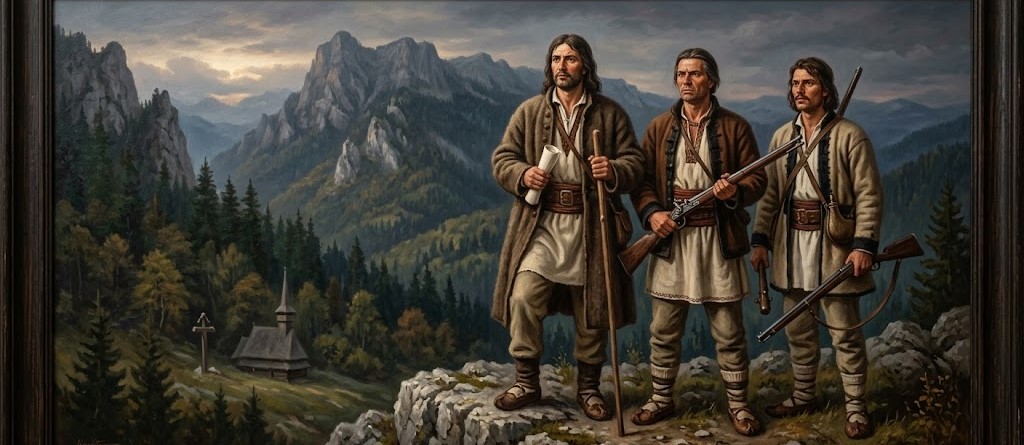
These three men, though simple peasants by birth, possessed extraordinary leadership and a vision that transcended their time.
-Horea (Vasile Ursu Nicola): The main leader and diplomat. He traveled to Vienna several times to speak directly with Emperor Joseph II, seeking justice for his people. He was the "voice" of the oppressed.
-Cloșca (Ion Oargă): Horea’s closest collaborator and a brave strategist. His nickname, "Cloșca" (the Broody Hen), suggests someone who gathered and protected his people like a mother bird.
-Crișan (Marcu Giurgiu): The military soul of the movement. He was responsible for mobilizing the masses and led many of the tactical operations in the Apuseni Mountains.
The Fight for Justice
The revolt was sparked by the intolerable conditions of serfdom and the refusal of the local nobility to grant basic human rights. The "Supplex Libellus" of the peasants demanded:
- The abolition of nobility as a class.
- Fair distribution of land.
- Equal taxation for all citizens.
The Sacrifice and the Legacy
The end of their journey was tragic but heroic. Captured through betrayal, Horea and Cloșca were executed in Alba Iulia through the brutal method of breaking on the wheel—a punishment reserved for the most serious "crimes" against the state. Crișan chose to take his own life in prison to avoid the public spectacle.
Today, they are remembered as "The Icons" of national unity. Their sacrifice turned them into eternal symbols of the struggle for freedom. In the city of Alba Iulia, a magnificent monument stands near the fortress, honoring their memory and reminding every visitor that liberty is often bought with the ultimate price.
Did You Know?
Horea’s nickname came from the word "horea," meaning "to sing" or "to whistle" in the local dialect, because he was known for his beautiful voice and his ability to play the flute—a stark contrast to the iron will he showed in battle.
Frequently Asked Questions: Horea, Cloșca, and Crișan
1. Who were Horea, Cloșca, and Crișan?
They were the three primary leaders of the Great Peasant Revolt of 1784 in Transylvania. Born as simple peasants in the Apuseni Mountains, they became the voice of the Romanian majority, demanding the abolition of serfdom and equal rights under the Austrian Empire.
2. Why is their revolt considered a turning point in history?
Although the revolt was suppressed, it was the first major organized movement where Romanians demanded social and national justice. It forced Emperor Joseph II to officially abolish serfdom (iobagia) shortly after, marking a massive victory for human dignity in the region.
3. What can I visit to learn more about them?
- Alba Iulia: The impressive Horea, Cloșca, and Crișan Obelisk and the cell where Horea was imprisoned within the Alba Carolina Fortress.
- The Apuseni Mountains (see more): Visit the village of Horea (formerly Fericet) to see Horea’s memorial house and the ancient "Horea’s Ash Tree."
- Brad: The "Crișan Museum" offers a deep dive into the military leader's life and the tactics used during the uprising.
Horea and Cloșca were captured through betrayal and executed in Alba Iulia using the brutal "breaking on the wheel" method—a tragic end that turned them into eternal martyrs for the Romanian people. Crișan took his own life in prison to deny the authorities the satisfaction of a public execution.
5. Why are they called "The Icons of Romania"?
They represent the spirit of sacrifice. Their struggle paved the way for future generations to fight for the Great Union of 1918. They are not just historical figures, but symbols of the unbreakable will of the Romanian people to live in freedom.
