
A Brilliant Military Strategist
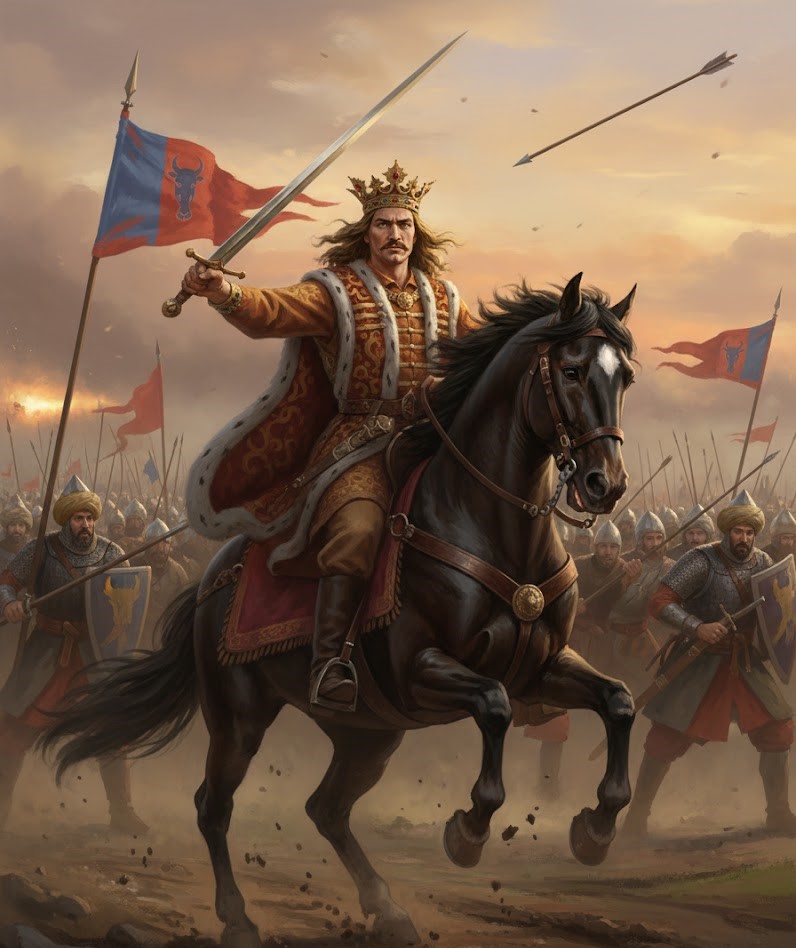
At a time when Moldavia was surrounded by powerful empires, Stephen managed to maintain its independence.
- The "Scorched Earth" Tactic: He was a master of asymmetric warfare. To defeat much larger armies, he would often burn crops and poison wells, forcing the enemy to retreat due to hunger and thirst before even meeting him on the battlefield.
- The Battle of Vaslui (1475): His greatest victory, where he defeated an Ottoman army nearly three times the size of his own. It was a victory that echoed throughout Europe.
The Great Builder of Monasteries
Stephen's legacy isn't just written in blood, but in stone. Legend says that after every major victory, he built a church or a monastery to thank God.
- UNESCO World Heritage: Many of the famous "Painted Monasteries of Moldavia," such as Putna (see more) or Voroneț (see more), owe their existence or inspiration to his reign.
- The Moldavian Style: He created a unique architectural style that blended Gothic elements with Byzantine traditions, creating some of the most beautiful religious buildings in Eastern Europe.
Today, Stephen is not just a historical hero but a Saint in the Romanian Orthodox Church. He is remembered as a ruler who was harsh but fair, deeply religious, and completely dedicated to his people's survival.
FAQ: Stephen the Great (Ștefan cel Mare)
1. Why is he called "The Great"?
Because of his exceptionally long and stable reign, his military genius in keeping Moldavia independent, and the immense cultural and religious heritage he left behind through dozens of built churches.
2. Where is he buried?
His tomb is located at Putna Monastery, which he founded. It remains a major pilgrimage site for Romanians today, often called the "Jerusalem of the Romanian People."
3. Did he really build a church for every victory?
While 44 victories and over 40 churches are the numbers often cited by legend, historical records confirm he was indeed one of the most prolific builders in European history.
4. Can I visit his fortresses today?
Yes! The Neamț Citadel (see more) and the Suceava Princely Fortress (see more) are impressive medieval sites that offer a glimpse into how he defended his land.
