
A Tropical Beauty in Transylvania
The thermal water lily is famous for its large, round leaves and its delicate white-creamy flowers.
- The Blooming Cycle: Unlike common water lilies, the thermal variety usually opens its petals in the evening and during the night, closing them under the strong midday sun.
- Geothermal Heat: It requires a constant water temperature of about 20°C to 30°C to thrive, which is why it found its perfect home in the thermal waters of Bihor County.
- Ancient Origins: Scientific studies suggest that this species has been present in the Oradea region for thousands of years, migrating from North Africa during a much warmer geological epoch.
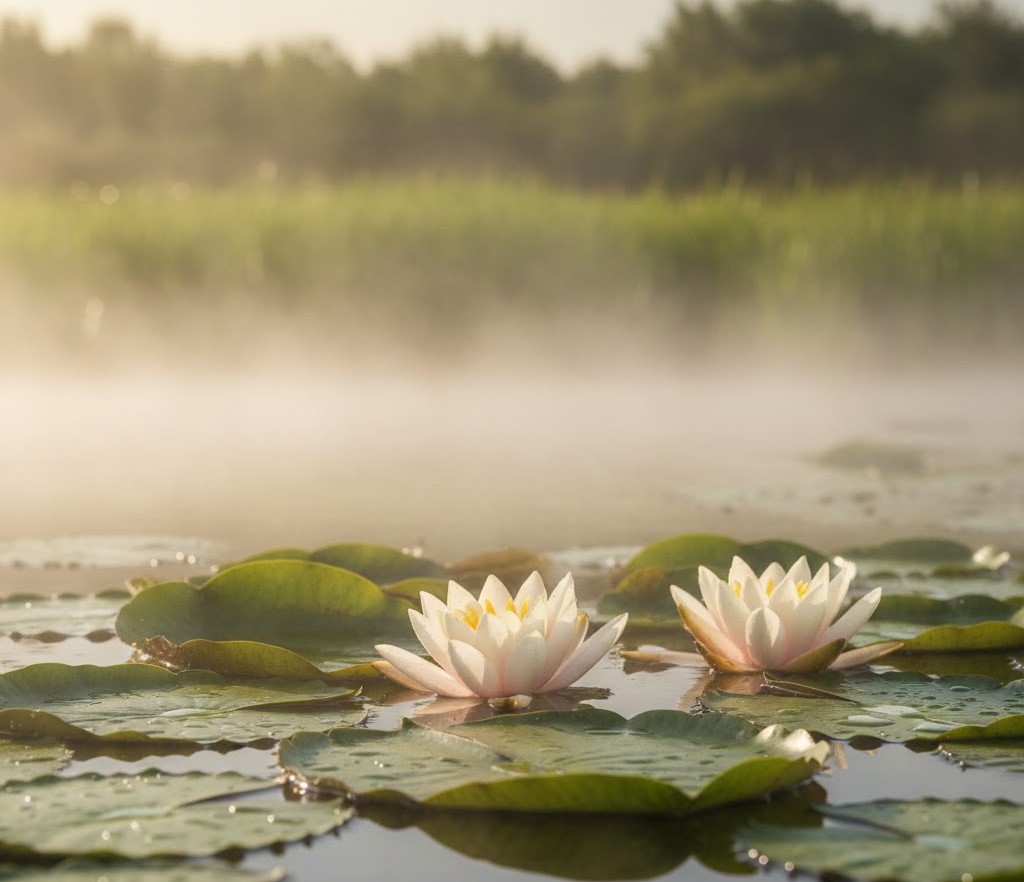
The Legend of the Enchanted Spring
Local legends say that the thermal springs of 1 Mai were created by the tears of a woodland nymph who fell in love with a mortal. Because they could never be together, her tears warmed the waters, and where they fell, the white lilies blossomed as a symbol of her pure and eternal love. To this day, it is said that the lilies only bloom for those who have a peaceful heart.
FAQ: Thermal Water Lily (Nufărul Termal)
- Where can I see the Thermal Water Lily?
The natural habitat is the "Pețea Lake Nature Reserve" in Băile 1 Mai, near Oradea. It can also be found in the thermal lakes of Băile Felix. - Is it endangered?
Yes, it is critically endangered. Due to the decrease in thermal water levels in recent years, scientists and conservationists are working hard to preserve the species in special botanical tanks and through restoration projects. - When is the best time to see it in bloom?
The flowering season is typically between June and October, with the peak usually occurring in July and August. - Can I take a flower as a souvenir?
Absolutely not. The Thermal Water Lily is a protected monument of nature. Picking the flowers or damaging the plants is strictly prohibited and carries heavy fines.
